
Independent data cabling · Not NBN Co, not an ISP
Box in the garage, nothing where you work? Data cabling that puts the cable where the house needs it.
The office is upstairs, the router is downstairs, and the ports the builder left in every room have never worked. Mesh helps some houses and not others. One data cabling quote covers the cable to where the house needs it, and tests what's already in the walls first. Quotes are free within 5 km of our Sutherland Shire office. Phone or photo estimates are free where the job allows.
Get a quoteBook a site visitGet a live estimate Play the 1 min SECURE A COM film (opens in a new tab)


Trusted by 1,000+ businesses
-
Adrian Rees
★★★★★Second time working with Jason. Stellar service, highly recommend for any NBN or data cabling work!
-
Brendon Xu
★★★★★Quick turn around by Jason. Knows what he is doing. Highly recommend for granny flat NBN installations.
-
Emily Williams
★★★★★I would definitely recommend this business! Jason came out and installed an NBN wall socket the same day that I enquired about it. He was very kind and helpful - managed to install it in 30 minutes hassle free.
Read more Show less
-
Christopher James
★★★★★Jason from Secure A Com is your go-to for any networking services. Very reliable, professional and lots of detail and care in what he does. Highly recommend.
Read more Show less
-
Lesley Pavlis
★★★★★Thank you for the inspection, recommendation and installation of NBN cabling to our property. I highly recommend your quick response, reliability and great service
Read more Show less
-
William Stewart
★★★★★As a retired engineer, I really appreciate the professionalism shown by Jason in connecting the NBN landline and internet from the main house to our separate "granny flat" at the rear of the block. He was punctual and completed the task within the time he had allowed. His phone number is definitely in my list of contacts.
Read more Show less
-
Kerry Mullins
★★★★★A neighbour recommended Secure A Com after watching some of its YouTube posts regarding installations. On calling Jason, it didn't take too long for me to realise Jason knows what he's talking about. On assessing our internet requirements onsite, he provided us numerous alternatives even if it meant less work opportunity for him. Also, very professional website, easy to understand scope of works with pricing and booking/confirmation service. I recommend Secure A Com for all your internet/network installations.
Read more Show less
-
Boris Shen
★★★★★Jason and his team are amazing, Great Quality of workmanship, very knowledgeable . Can be trusted to work on their own accord. I was extremely happy to find them as a new business partner Highly recommended ! Thank you
Read more Show less
Sound familiar?
Data cabling in Sydney: what a cable run covers, and what it does not
Two people working from home, one router in the garage, and ports in every room that have never worked.
One cable usually fixes it. Data cabling in Sydney is the run from the NBN box to the room that needs it, tested and labelled, with the old cable made to work first.
Read moreShow less
Run a cable from the garage to the office upstairs, or to behind the TV. There are ethernet ports in every room and not one of them works. The electrician left a hole in the wall full of wires and no sockets. The socket in the main bedroom doesn’t pick up the internet but the one in the dining room does. I’ve got fibre and I’m capped at a hundred. The three-level townhouse has ports, just not where I want them.
Nobody who rings says “structured cabling”, the trade’s word for all of this. They say run a cable, and that is what this page is: the cable from the NBN box to the room that needs it, in a house, a townhouse, a unit or a granny flat, and in a small office. Four in ten of the people who ring already have fibre to the premises and no cable to the room; the NBN is rarely the problem, the last twenty metres are. Multi-pair copper cabling for a whole building is the NBN cabling page, and the pipe from the street is NBN conduit installation. We work across Sydney from the Sutherland Shire, and we take jobs further out. The extra travel is charged, and the rates are in our terms and conditions.
Free advice
Before you book: what to check first
Each of these is advice we give on the phone, for free, over and over. Do them first and the quote is shorter, or you may not need one.
Keep this list handy
Get all ten checks as a two-page PDF before anyone opens a wall.
Send me the free guide- If the router is in the garage, one cable is usually the fix. Run one cable from the box to the middle of the house and put the router there. The box stays where it is.
- Two cables take the same time as one. If we are opening the wall and the ceiling, run the second cable now. It is the cheapest point you will ever add.
- Old cable in the wall: pull the socket off and look. A black cable straight from outside is the NBN line and is fine. Blue cable with eight wires is ethernet and can usually be made to work. Thin phone cable with two or four wires cannot carry ethernet, whatever the socket looks like.
- Ports in every room and none working usually means nobody terminated them. They run back to a cupboard or the garage and stop. A switch and a patch panel at that end, tested point by point, is the job. It is not a recabling job.
- Old cable cannot always do gigabit. The older category cannot; the current one can. If you are paying for a fast plan and the cable was put in a long time ago, a test tells you before you spend anything. Test your speed on a cable, not WiFi, and you will see which it is.
- Mesh is the alternative, and sometimes the better one. A rental, a slab, no cavities: three mesh units placed properly can beat a cable you cannot run. If you already have cable in the walls, mesh units plugged into it as access points beat mesh units talking over the air. The WiFi Technician page has the four fixes, and why mesh keeps disconnecting explains the difference.
- Don’t add a second socket on the NBN line. Two sockets on one copper line is a bridge tap. Run a data cable from the router instead.
Read moreShow less
- Outside, the cable has to be rated for it. Internal blue cable in a wet conduit fails within a few years. Gel-filled underground cable, or a wireless bridge, for the granny flat.
- On FTTP, the box on the house can carry more than one service. The NBN box has several data ports, so a granny flat can have its own service over a cable from the house’s box, without a second lead-in from the street. For its own bill it still has to be added to NBN’s records: your provider asks for that, not the council. The full version is in NBN for a granny flat.
- Send photos and a distance. Many cable runs are quoted from photos and a number of metres. Some need a look first, and the terms say what that costs.
Recognise it?
What the house actually needs, and what you get
The box is in the garage and the room you work in has nothing
The router went in the garage with the box, and the room you work in gets what's left after two walls and a floor. One cable is usually the whole fix.
Usually points to: a tested point in that room, and the router where the house needs it.
Read moreShow less
The box went in the garage and the router went with it. The office upstairs, or the desk behind the TV, gets whatever is left of the WiFi once it has been through two walls and a floor, and on a fast plan that is the part you are paying for and not getting.
One cable is usually the whole fix. It runs from the box to the middle of the house, or straight into the room that needs it, and the box stays where it is.
What you end up with. A tested, labelled point in that room, and the router where the house needs it rather than where the cable came in. A second cable costs very little while the wall and the ceiling are open.
The five versions of this job ›When moving the box is the answer instead ›
Points in every room, off one patch panel
An office, a TV wall, two people working from home. A point in each room that needs one, all back to one cupboard, with access points where WiFi is part of it.
Usually points to: every point tested and labelled, back to one patch panel.
Read moreShow less
Three levels, an office, a TV wall and two people working from home. A house wired properly has a point in each room that needs one, a switch and a patch panel in a cupboard, and an access point on each level where the WiFi is part of the brief.
Where the house has ceiling and wall cavities the cable goes through them. Where it has not, a colorbond roof, a slab, single-skin or double-brick walls, it goes in neat surface conduit, and we say which before you decide rather than after.
What you end up with. Every point tested and labelled, and one cupboard they all come back to, so the next thing anybody adds plugs into a socket instead of needing another cable run.
The five versions of this job ›When mesh is the better answer ›
There are ports on the wall and none of them work
Ports on every wall and none of them work. Usually nobody finished the other end: the cable runs back to a cupboard and just stops.
Usually points to: what's in the walls tested, terminated and labelled, often with nothing new run.
Read moreShow less
Thirteen points in a rental and not one live. Ethernet ports in every room and nothing on any of them. Or a hole in the wall full of wires where an electrician stopped. Usually nobody terminated them: the cable runs back to a cupboard or the garage and simply ends there.
Pull a wall plate off and look before you spend anything. Blue cable with eight wires is ethernet and can usually be re-terminated. Thin phone cable with two or four wires cannot carry ethernet whatever socket is on it, and a black cable straight in from outside is the NBN line.
What you end up with. What is already in the walls tested, terminated and labelled, with a switch and a patch panel at the cupboard end. Often the whole job, without running anything new.
What the cable in your wall can carry ›The five versions of this job ›
The granny flat, the studio or the shed out the back
A granny flat, studio or shed out the back, and the yard between decides the job. The cable crossing it has to be rated for the ground.
Usually points to: rated cable in conduit with a socket at each end, done once.
Read moreShow less
A granny flat, a studio or a shed out the back, and the yard between it and the house is what decides the job. The cable that crosses it has to be rated for the ground: gel-filled underground ethernet in conduit, a socket at each end, a router in the flat. One enquiry in five on this page is a second building.
Internal blue cable in a wet pipe fails within a few years, which is why it does not go there. Where a trench is not possible, a wireless bridge carries it across instead.
What you end up with. Rated cable in conduit under the yard with a socket at each end, done once. On fibre, the flat can run its own service off a spare port on the house's box once your provider has had NBN add it.
The usual suspects
Run an ethernet cable, or make the old one work: what’s usually wrong
From the assessments we give on the phone, the same handful of situations come up on nearly every cabling call.
- The box is where the installer put it:
Garage, wardrobe, one end of the house. Usually one cable fixes it, not a box move.
Read moreShow less
garage, wardrobe, one end of the house. The router is there too, and the WiFi does not reach. Where moving the box is the right answer, that is NBN box relocation; usually it is not.
- Cable in the walls that was wired for phone
Wired for phone, punched down on one pair, or never terminated at all.
Read moreShow less
, or terminated on one pair, or never terminated at all. Thirteen points in a rental, none live.
- Old category cable in the slab
Older cable that can't carry the speed you're paying for.
Read moreShow less
that will not carry the plan speed.
- A three-level townhouse with no cavities
Single-skin or double-brick walls, so the route is surface conduit, and we say so up front.
Read moreShow less
, single-skin or double-brick walls, and cables clipped to the frame during construction.
- Concrete slab, no underfloor, gear on an interior wall:
Surface conduit, a chased wall or mesh: you choose on price.
Read moreShow less
surface conduit, wall chasing or mesh, and you choose on price.
- A second socket on the copper line
Two sockets on one line is a bridge tap, and the service drops out.
Read moreShow less
, so the service drops out.
- A granny flat with no cable to the house
No cable, the wrong cable, or a flat still waiting on NBN to add it.
Read moreShow less
, or the wrong one, or a dog; or a flat whose address is not in NBN’s database yet, so sharing the house’s service over a cable from the box’s spare port is the interim answer.
- In an office, the outlet is fine and the pair at the frame is wrong.
In an office, check the frame before running anything new.
Read moreShow less
Check the MDF before running anything new.
- The router locked in a hallway cupboard
Cooking in a hallway cupboard, with an unused cable to the living room already there.
Read moreShow less
, cooking, with a data cable to the living room already there and unused.
Old cable?
Cat5, Cat6 or Cat6a: what the cable in your wall can carry
Pull a wall plate off and look before you spend anything. Blue cable with eight wires can usually be made to work. Thin phone cable can't carry ethernet whatever socket is on it, and a test says whether an old run is capping your plan.
Read moreShow less
Pull a wall plate off and look at the back of it, because the cable already in the house decides most of the price. Blue cable with eight wires is ethernet and can usually be re-terminated for data. Thin phone cable with two or four wires cannot carry ethernet, whatever socket is fitted to it. A black cable straight in from outside is the NBN line and is left alone.
Of the ethernet that is there, the older category cannot carry gigabit reliably, so an old run is sometimes what caps a fast plan; the current one carries it comfortably, and a heavier grade is for long runs to access points and for headroom past gigabit. A test on the cable says which you have before anything is bought or pulled out. Running it all back to one place with a patch panel is what the trade calls structured cabling, and it is the same words: cable, sockets, and a cupboard where they all meet.
Second building?
The granny flat, the studio and the shed: cable, or a wireless bridge
The yard decides this job. The cable that crosses it has to be rated for the ground, in conduit, with a socket at each end. Where a trench isn't possible, a wireless bridge carries it across instead.
Read moreShow less
One enquiry in five on this page is a second building out the back, and the yard is what decides the job. The cable that goes across it has to be rated for the ground: gel-filled underground ethernet in conduit, a socket at each end and a router in the flat. Internal blue cable in a wet pipe fails within a few years, which is why we will not put it there. Where a trench is not possible, a wireless bridge carries it across instead.
Whether the flat shares the house’s connection or gets its own is the other question. On fibre to the premises the box on the house has spare data ports, so the flat can run its own service over one cable from the house without a second lead-in from the street, once your provider has asked NBN to add the flat. That call goes to the provider, not the council. Until that happens, sharing the house’s service over that cable is the interim answer. The full version is in NBN for a granny flat.
How it works
Data point installation: what we actually do, cheapest first
Cheapest first, and the first step is often the whole job. What is already in the walls gets tested before anything new is run, and every point is tested and labelled before we leave. The quote comes as options where it helps, so you choose on price.
-
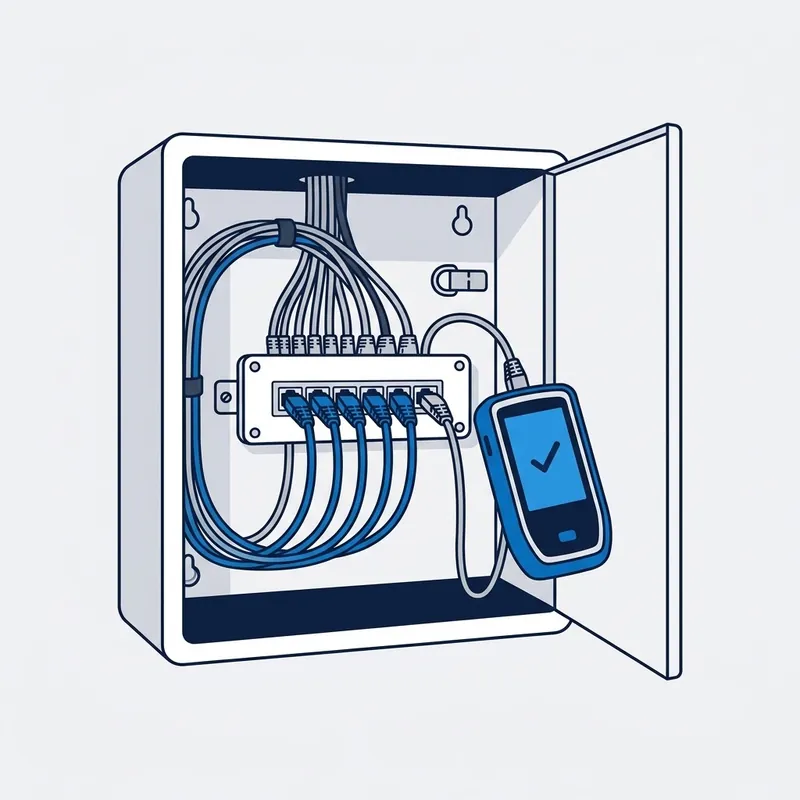
Make the existing cable work.
Terminate what the builder or the electrician left, test every point, label it, and put a switch and a patch panel at the cupboard end. No new cable is run if the old cable tests good, and on a house full of dead ports that is usually the whole job.
-
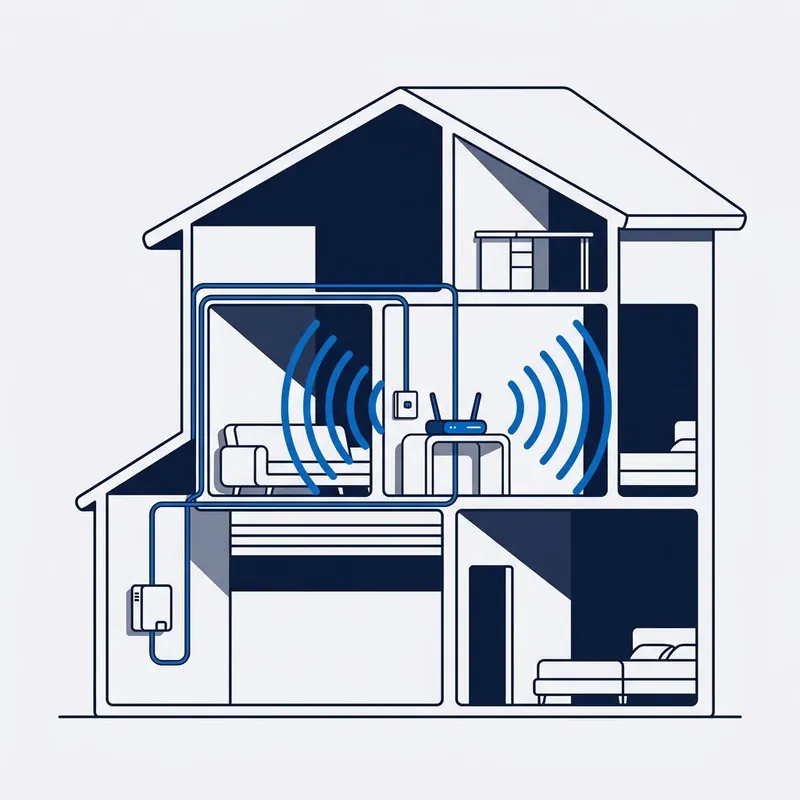
One cable to the router.
From the box to the centre of the house, a data point where the router should live. It is the run that fixes more houses than anything else we do, and it leaves the box where NBN put it.
-
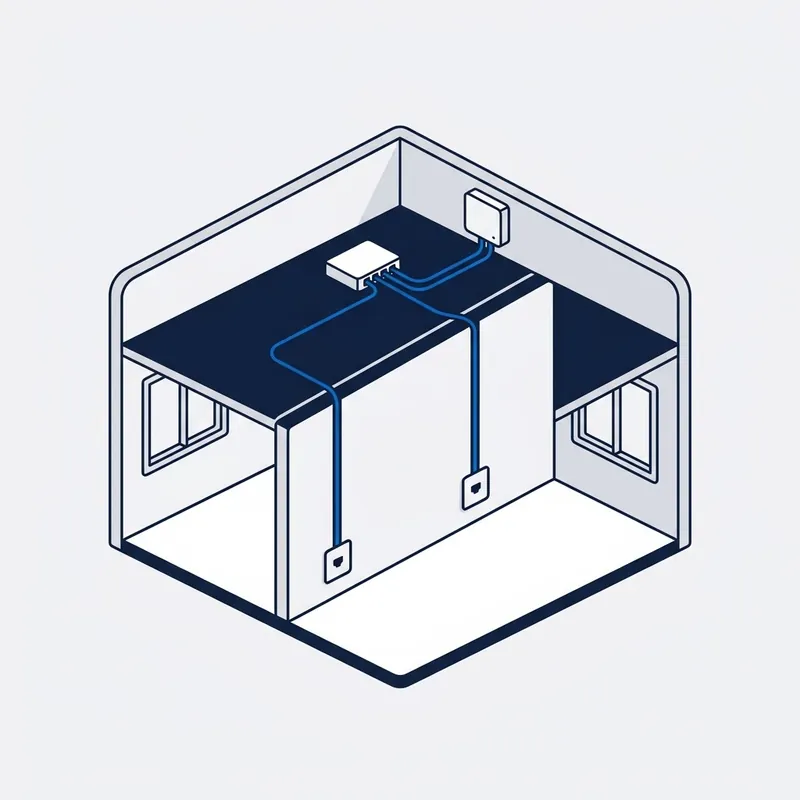
Points to the rooms.
Through the ceiling and the wall cavities where the house has them, flush plates, nothing visible. Where it has none, external brick, a colorbond roof or a slab, surface conduit is the only compliant route and we say so before quoting rather than after. A switch beside the box, one cable per room, two where the room is an office or a TV wall.
-
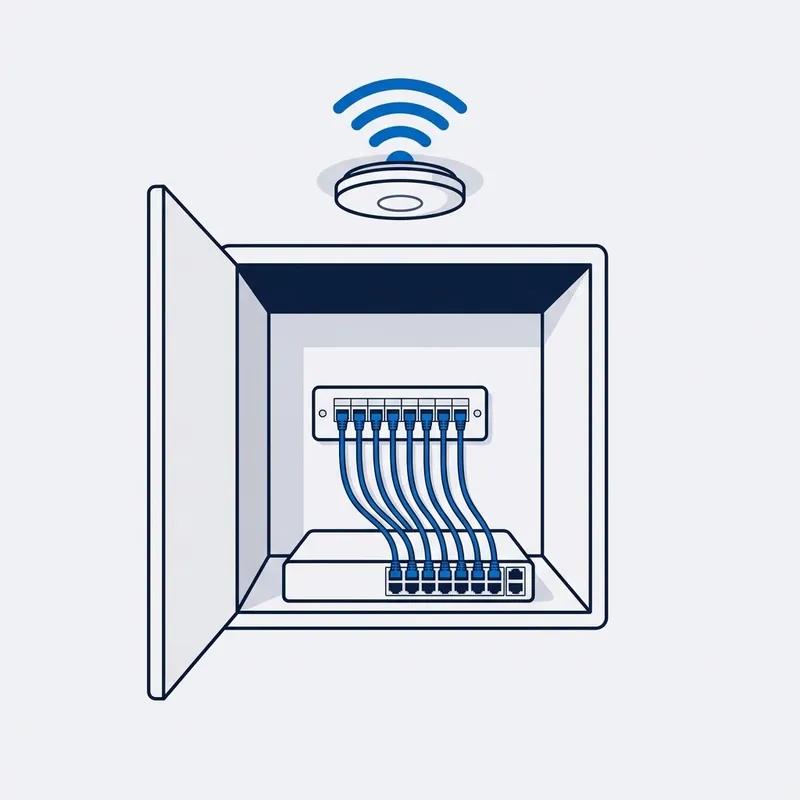
The whole house.
A patch panel in the cupboard, every point back to it, and access points on each level where WiFi is part of the brief. That is what the FTTP upgrade page means by leaving the box where the fibre lands and cabling the house from a switch beside it.
-
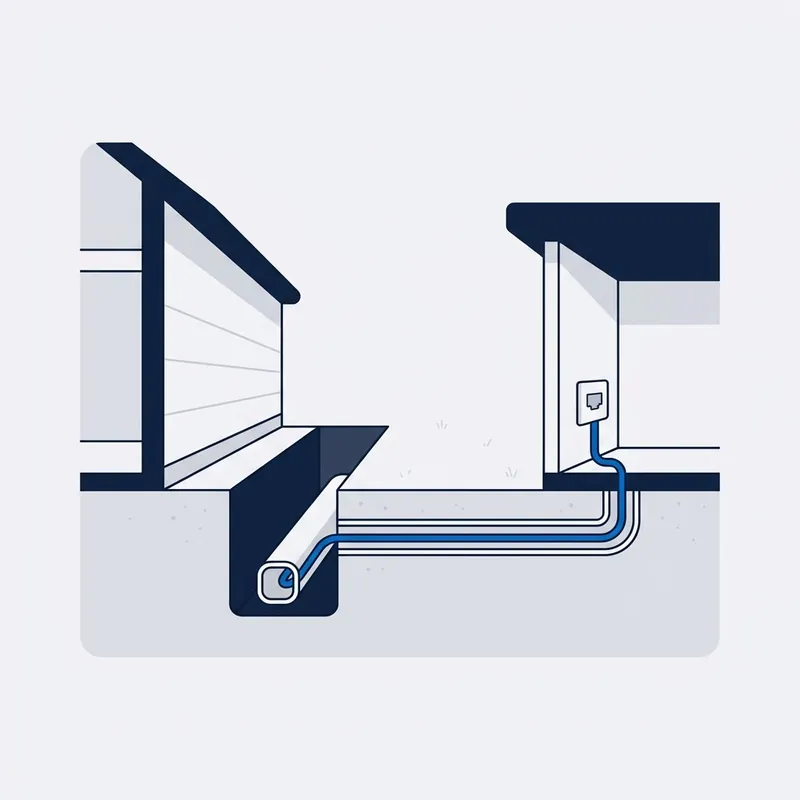
The second building.
Rated cable in conduit to the flat, studio or shed, or a wireless bridge where you can't trench.
Read moreShow less
Gel-filled underground cable in conduit to the granny flat, the studio or the shed, with a socket at each end; a wireless bridge where trenching is not possible. One enquiry in five here is a second building.


Written by customers on Google. None are paid for, and every word here is theirs.
Read all reviews on Google › (opens in a new tab) Leave a review (opens in a new tab)
Reviews
What people say after the job.
“We couldn't be happier with how our office relocation went. We have over 20 workstations, the boys from SECURE A COM wired our new office for phones and data.”
A real job from the field

Helensburgh, NSW · FTTP · Filmed on site, 9 min
Cathedral ceilings, a Colorbond roof, and nowhere to hide a single cable.
A new build in Helensburgh with no ceiling cavity, so the whole house was cabled in fitted surface conduit: twenty-three data points, two cables to each room, all back to a central patch panel, with access points for the WiFi. The NBN went live on the last of five days, every room already on a cable.
Read moreShow less
Helensburgh, a new build with a Colorbond roof and cathedral ceilings, so no ceiling cavity to run cable through. With nowhere to hide a cable, the whole house was cabled in fitted surface conduit: twenty-three data points, with dual cable run to each room, all back to a central patch panel, and wall-mounted access points for the WiFi off the same cabling.
The job ran over five days, and the NBN connection was commissioned on the last of them, so the house went live with every room already on a cable.
Price
How much does data cabling cost?
Quoted not fixed
What's included
- Free quote within 5 km
- Free estimate from photos
- Written quote, valid 14 days
- 12-month cabling warranty
- Maker's warranty on parts
Free Spaces account with every job, if you want one. What's Spaces?
What moves the price is how many points, how long each run is and the route it takes. Several points in one visit is the cheap way, and cable already in the wall that tests good is used, not replaced.
Read moreShow less
This work is quoted. Quotes are free for properties within 5 km of our Sutherland Shire office. Beyond 5 km a site inspection is charged at $250 inc. GST, and the written quote follows the inspection; the inspection fee may be credited against the job at our discretion.
We are a specialised service, so we may not be local to you. If you are outside Sydney or more than 40 km from our office, we can still come to you, but the extra travel means an extra travel charge. All travel charges are set out in our terms and conditions.
Phone or photo estimates are free at any distance where the job allows, so most of this work is priced from photos and a rough distance before anyone drives anywhere.
What you get in writing
| Quote | Price | What it contains |
|---|---|---|
| Photo or phone estimate | Free | A ballpark from your photos, a rough distance in metres and your answers, before anyone drives anywhere. Free at any distance where the job allows. |
| Written quote | Free | Free for properties within 5 km of our Sutherland Shire office, after a look at the job. Valid 14 days. |
| Site inspection, further out | $250 inc. GST | Beyond that distance a site inspection is charged, and the written quote follows it. The inspection fee may be credited against the job at our discretion. |
Trusted on site by
Commercial fault and cabling work, done by the same technician who comes to your house.











Your options
What is already in your walls, and what it can carry
| How you recognise it | What it can carry | What happens to it on the day | |
|---|---|---|---|
| Blue cable with eight wires | Round blue or white cable, eight coloured wires in four twisted pairs, usually behind a flat wall plate. | Ethernet. The current grade carries gigabit comfortably; an older grade often will not, which is sometimes what caps a fast plan. | Tested first. If it tests good it is terminated, labelled and used, and no new cable is run to that room. |
| Thin cable with two or four wires | Flat or thin round cable, two or four wires, behind an old phone socket. | A phone line. It cannot carry ethernet whatever socket is fitted on the front of it. | Left where it is. The room gets a new run, because there is nothing here to make work. |
| A black cable straight in from outside | One black cable entering the wall from the street side, usually at the first socket or the box. | This is the NBN line itself, not internal cabling. | Left alone. Nothing is spliced into it and no second socket is added to it. |
| Ports in every room that do nothing | Flat plates in each room, a bundle of cable in a cupboard or the garage, and nothing live anywhere. | Usually full ethernet that nobody ever terminated, or one pair of eight punched down. | The ends are found, terminated and labelled, a switch or patch panel goes in at the cupboard end, and every point is tested. |
| Nothing in the walls at all | An older house, a rental, or a slab with no cavity and no ceiling access. | Nothing, so what matters is the route rather than the cable. | One run to where the router should live, in the ceiling and cavity where the house has them, in neat surface conduit where it does not, or mesh quoted beside it so you choose on price. |
SourcesHide sources
Sources: AS/CA S009:2020, the customer cabling standard this work is run to; the cable categories' own published performance grades. Our own fees and reports are in our terms and conditions.
Whoever your provider is, the answer is the same.













Questions
Frequently asked questions
Something not covered? Call 02 9188 1577 and ask, or send it through the contact form and you get the answer in writing.
What does a data point cost, and is there a call-out fee?
It is quoted, because no two runs are the same job, and for the quote there is usually no fee. The price is set by how many points, how long each run is, the route the cable takes and whether a switch or patch panel goes in. Most runs are quoted from photos and a distance. Where a job needs a look first, that visit is the service call, which per the terms may be credited.
Do you need to come out and look before you can quote?
Not for most runs. A photo of the NBN box and router, one of the wall where you want the point, one of the path between, and a rough distance is enough to quote one or two points. A whole-house job, a three-level townhouse or a slab with no cavities needs a look, and the terms say what that costs and when it is credited.
Can I send photos or a floor plan?
Yes, please. A floor plan with the router marked and the rooms that need points circled is the best thing you can send; photos of both ends of any cable that is already there are the next best. We ask for them when we reply to your enquiry, and the quote comes back as options where it helps: cable only, or cable plus mesh, so you choose on price.
The NBN box is in the garage. Can you run a cable to where the router should be?
Yes, and it is the fix that works more often than any other. One cable from the box to the middle of the house, a data point there, the router moved onto it; the box stays in the garage. If the whole house needs points, a switch beside the box and one cable per room. Moving the box itself is rarely the cheaper answer.
Can you run the cable inside the walls so nothing shows?
Where the house has cavities and a ceiling we can get into, yes: through the ceiling and down the wall to a flush plate, nothing visible. External brick, a colorbond roof, a slab or a rendered wall with no cavity can make surface conduit the only compliant route; we say so before quoting, and fit it neatly rather than pretend a cavity exists.
There's an ethernet socket in the wall but nothing works when I plug in. Can you make it work?
Usually, and it is often cheaper than you fear. Ports in every room and none working nearly always means nobody terminated the other end: the cables run to a cupboard or the garage and stop, or one pair of eight was punched down. We find the ends, terminate and label them, add a switch or a patch panel, and test every point.
Can I use the old phone cabling instead of running new cable?
Pull the socket off and look. Blue cable with eight wires is ethernet and can usually be re-terminated for data. Thin phone cable with two or four wires cannot carry ethernet no matter what socket is on it. A black cable straight from outside is the NBN line and is left alone. Photos of the back of the socket tell us which you have.
Cat5, Cat6 or Cat6a: which do I need?
Cat6 for nearly every home. The older Cat5 cannot carry gigabit reliably, so an old run may be what is capping a fast plan. Cat6a is for long runs to access points and for headroom beyond gigabit, at the cost of a stiffer cable that needs more room to bend. If cable is already in the walls, a test says whether it is worth keeping.
Is it cheaper to run several cables at once?
Yes. The ceiling is open once and the wall is cut once, and a second cable to the same room takes the same time as the first. It is always cheaper to add points during the original run than to come back for one later, so tell us every room you might want, including the one you are not sure about.
Can you get a cable to the granny flat?
Yes, with cable rated for the yard: gel-filled underground ethernet in conduit, never internal blue cable in a wet pipe, a socket at each end and a router in the flat. On FTTP the house's box has spare ports, so the flat can have its own service over that cable once your provider has asked NBN to add it. The granny flat guide covers the address.
Would mesh be cheaper than cabling?
Sometimes, and we quote both so you choose. In a rental, on a slab, or in a house with no cavities, three mesh units placed properly beat a cable you cannot run. In a house that already has cable in the walls, mesh units plugged into it as access points beat mesh talking over the air, and the cabling is the cheap part.
Do I need a registered cabler to run ethernet in the walls?
Yes. Cabling that connects to the NBN or the phone network, which a data cable from the NBN box does, is customer cabling and has to be done by a registered cabler. Our technician is an Open Registered Cabler, registered through ASIAL, an ACMA-accredited cabling registrar; the licence and method statement is on the about page.
Is there a standard the cabling has to meet?
Yes. Cabling here is run to AS/CA S009:2020, the wiring rules for customer cabling. In practice that means telecommunications cable kept the required distance from power cable where the two run together, and a barrier between them where that distance cannot be kept. It is one of the things a registered cabler is for, and it is why a cable is not simply pulled through the nearest hole.
Dig deeper
Guides for this job
5 guides
- 15Sept
Guide
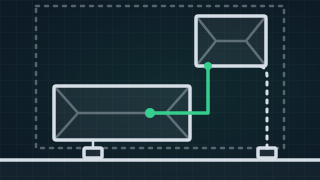
Granny flat NBN: your own service, or share the house's?
Can a granny flat have its own NBN? How your provider gets the flat onto nbn, sharing the house's service over a cable, and what to lay before the slab.
Read the guide › - 12Nov
Guide
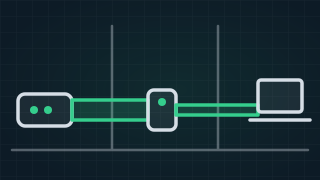
Do WiFi Range Extenders Really Work? Extender, Mesh or Cable
Do WiFi extenders work, are they worth it and are they safe? What an extender can and cannot do, when mesh is better, and when a cable beats both.
Read the guide › - 29Nov
Guide
Speed Test: Check Your NBN and Internet Speed
Free NBN and internet speed test. Check your download, upload and ping, see what a good result is for your plan, and what to do when the speed falls short.
Read the guide › - 15June
Guide
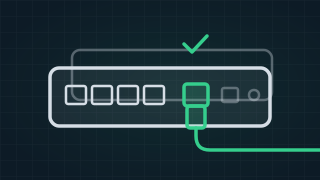
Best Modem for NBN and Best NBN Router: 12 Picks by NBN Type
The best modem for NBN and the best NBN router, with a pick for every NBN type: a DSL modem router for a phone socket, a WAN router for an NBN box.
Read the guide › - 16Dec
Guide
How to Set Up a Wired Home Network with Ethernet
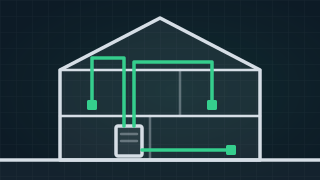
How to set up a wired home network: plan the hub, route Ethernet cable in a unit or a house, and add Ethernet ports to each room that needs one.
Read the guide ›
Data Cabling
Trusted by 1,000+ businesses