
MDF UPGRADE
SYDNEY
Full Frame Replacement. Every Pair Mapped.
Zero Connections Lost.
An MDF upgrade replaces your building's Main Distribution Frame — whether it's a legacy soldered frame from the Telstra or PMG era, or deteriorated modern modules — with a properly structured, fully-documented system. Every pair on both the A-side and B-side is mapped before work starts, reconnected in a controlled sequence, and tested before we leave the building. SECURE A COM has never lost a connection on any upgrade we have completed.
WHY YOUR BUILDING'S
MDF NEEDS REPLACING
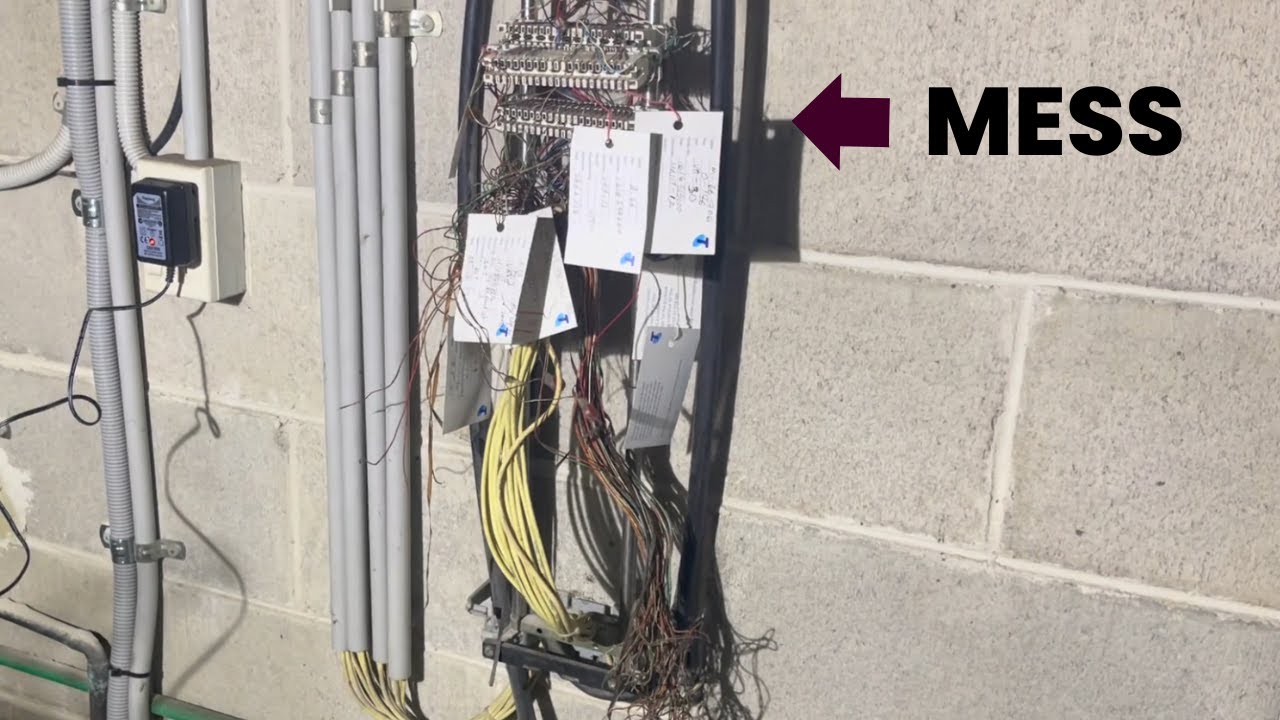
Most MDFs in Sydney apartment buildings were installed in the 1980s and 1990s — long before NBN existed. The symptoms that bring us in are consistent: persistent dropouts, sync instability, slow speeds that don't match the plan, line attenuation that climbs over time, and ISPs repeatedly resetting ports with no lasting resolution. Here is what we find when we open those comms room doors.
Legacy Soldered Frames Causing Building-Wide Signal Faults
Undocumented Pairs — Nobody Knows Which Apartment Is Which
Frame at Full Capacity — No Room for New Connections
Compliance Risk for Strata and Body Corporate Committees
Building Expansion Requiring Additional Pair Capacity
WE MAP IT.
WE PLAN IT.
WE UPGRADE IT.
An MDF upgrade is the most planning-intensive work we do. Every pair on both sides of the frame must be traced and documented before a single connection is touched. We have completed upgrades on MDFs from 10-pair residential frames to 200-pair commercial buildings — and we have never disconnected a live service or lost a pair in the process.
WATCH REAL MDF UPGRADE JOBS ON CAMERA
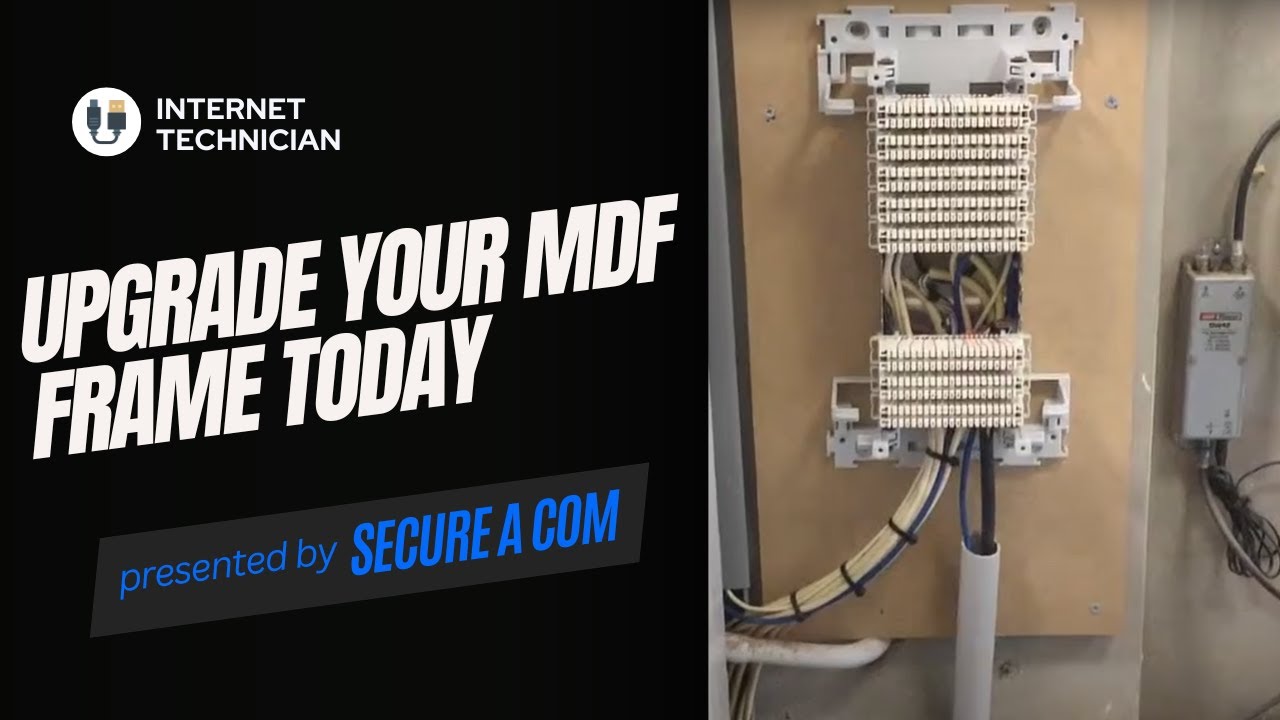
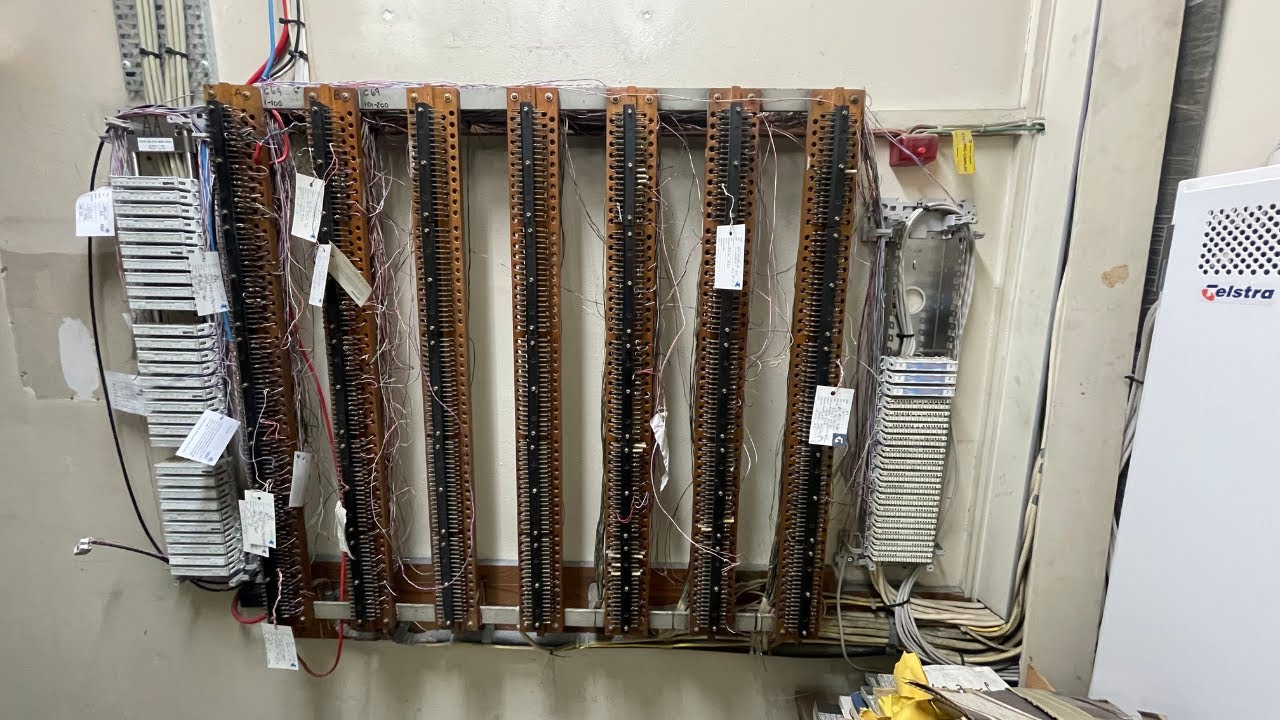
Residential buildings, commercial offices, and aging infrastructure — every MDF upgrade is different. Watch how we transform tangled, deteriorating distribution frames into clean, organised, compliant units that deliver reliable NBN performance.
TELECOMMUNICATIONS SERVICES SYDNEY
MDF upgrade is the most complex work we do — but it sits within a broader service offering for buildings and property managers across Sydney. From jumpering a single apartment to diagnosing NBN faults or running new data cabling, we cover the full scope.
MDF Jumpering Sydney
Before a full frame replacement is needed, most apartments require only jumpering — connecting a single pair via a short jumper cable. MDF jumpering is the standard activation step for NBN FTTB connections in apartment buildings.
Professional MDF jumpering servicesNBN Fault Repair Sydney
When an ageing MDF causes dropouts, slow speeds, or intermittent faults across the building, a targeted repair may resolve the issue before an upgrade is required. We diagnose and repair NBN faults of all types across Sydney.
NBN fault repair servicesInternet Fault Finding Services
Before committing to a full MDF upgrade, we can investigate whether the building-wide dropouts or signal degradation originate at the frame or elsewhere in the network. Full fault diagnosis from MDF to modem.
Internet fault finding SydneyPrivate NBN Technician Sydney
When residents in an apartment building have persistent NBN issues that ISPs keep attributing to internal wiring, an independent technician can investigate and determine whether the real cause is the building's MDF infrastructure.
Independent NBN diagnosisNBN Installation Services Sydney
After an MDF upgrade restores a building's cabling infrastructure to full capacity, new NBN connections for each unit can be established correctly — with properly documented pairs and no bridge tap risk.
NBN installation services SydneyData Cabling Sydney
Once an MDF upgrade brings the building's distribution frame up to standard, structured Cat6 data cabling within individual units delivers fast, reliable wired connectivity for home offices, commercial tenancies, and multi-room setups.
Structured data cabling installationNBN Internal Cabling Installation
When MDF upgrade work reveals that internal cabling within individual units is also degraded or incorrectly installed, we run new NBN cabling from the apartment socket to wherever you need it — correctly terminated throughout.
NBN cabling services SydneyWiFi Solutions Sydney
An upgraded MDF resolves the building's distribution infrastructure — but persistent WiFi dead zones inside units are a separate issue. We diagnose and optimise wireless coverage for homes, apartments, and commercial premises across Sydney.
WiFi solutions SydneyFROM FIRST CALL TO UPGRADED MDF
MDF upgrades are complex work — but the process is straightforward when you know what you're doing. Here's exactly what happens from the moment you reach out to the day your building has a clean, fully compliant Main Distribution Frame.
Book an Inspection or Call Us Direct
Book an on-site inspection online or call us on 02 9188 1577 — whichever suits you. We'll take the details of your building, the current condition of the MDF, and any known issues. From there we schedule a site visit at a time that works for you and the building manager.
On-Site Assessment — We Work Out Exactly What's Needed
We come to the building and assess the MDF in person. We inspect the condition of the frame, the existing cabling, the terminations, and the number of active and inactive pairs. From this assessment we determine what the upgrade requires — new frame, partial or full recabling, label system — and provide a written scope and quote.
Open Registered Cabler Maps Every Cable Before We Touch Anything
Before a single connection is disturbed, our Open Registered Cabler maps the entire frame — every pair traced from where it originates to where it terminates. Each cable is documented and a detailed map is created. This is the step that separates a professional MDF upgrade from a botched one. Without a complete map, reconnecting everything correctly after the new frame goes in is guesswork — and guesswork means service outages for residents.
Old MDF Removed — New Frame Installed and All Cabling Reconnected
The old frame comes out. The new compliant MDF goes in. Working directly from the cable map created in Step 03, every pair is reconnected in the correct order — no services missed, no pairs transposed. All connections are properly terminated, the cabling is dressed neatly, and every pair is labelled on the new frame. When we're done it looks exactly like it should: organised, documented, and built to last.
Full Testing — and a Free Return Visit Included Just in Case
Every connection on the new frame is tested before we leave. We verify continuity, check active services are live, and confirm the upgrade is clean end-to-end. If anything surfaces after we're gone — a pair that needs re-aligning, a service that didn't come back up — we return at no extra charge. That return visit is included in the price. In over 18 years of doing MDF upgrades across Sydney, we've never had to use it. We get it right the first time.
// Ready to get your MDF assessed?
BOOK AN INSPECTION Sydney-wide — we come to your building, assess the frame, and provide a written quoteINSPECTION FIRST. QUOTE AFTER.
MDF upgrades can't be priced without seeing the frame. We charge a fixed $250 to come to your building, assess the MDF, and document what's there. From that visit you get a written quote for the upgrade — before any work is committed to or paid for.
The $250 covers your on-site assessment — we come to your building, inspect the MDF, document the cabling, and gather everything needed to provide an accurate written quote for the upgrade. You decide whether to proceed after receiving the quote. Covers up to 40km travel from our Sutherland Shire office. See full terms and conditions →
PRICING FAQ
LICENSED. CERTIFIED. ACCOUNTABLE.
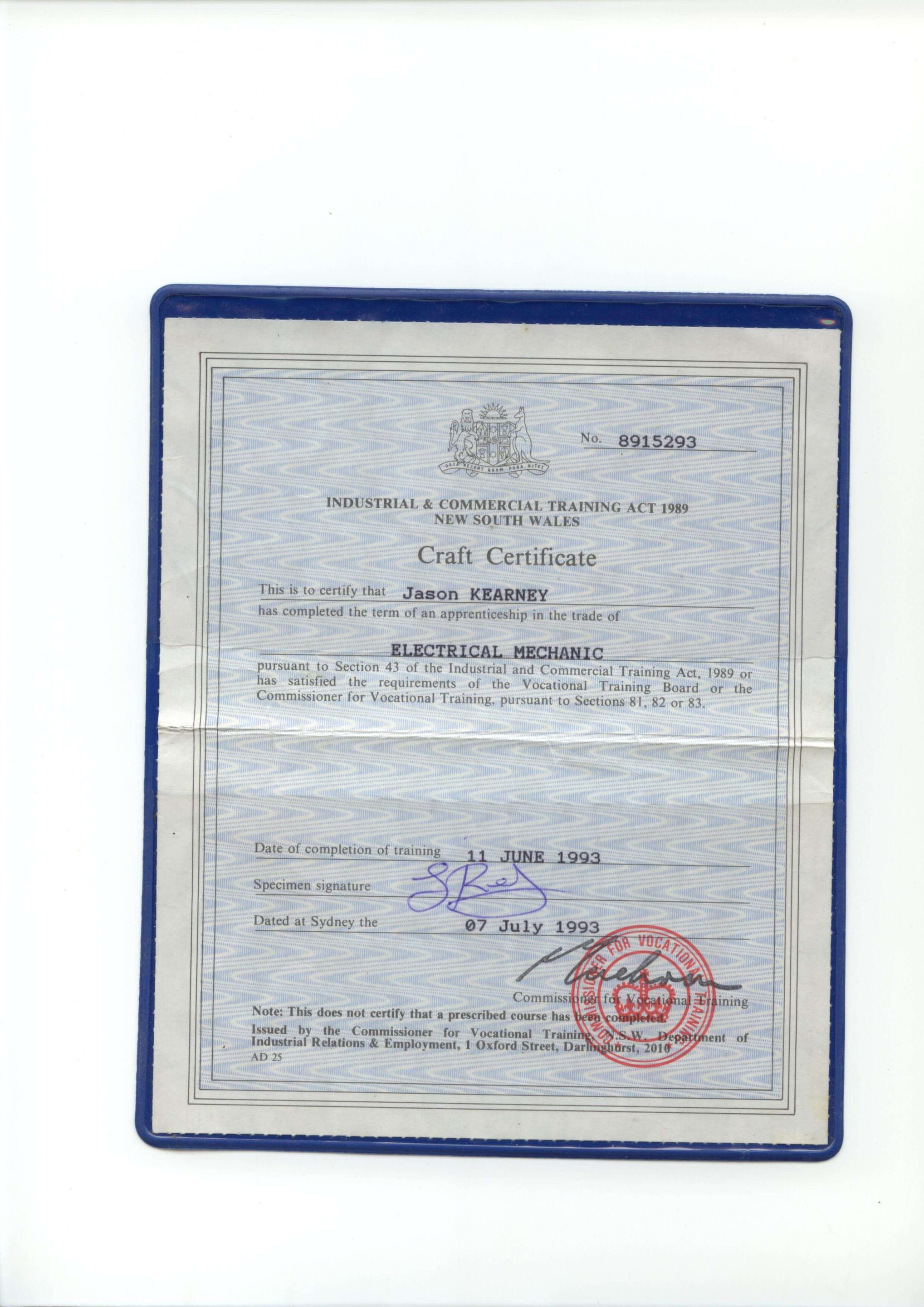
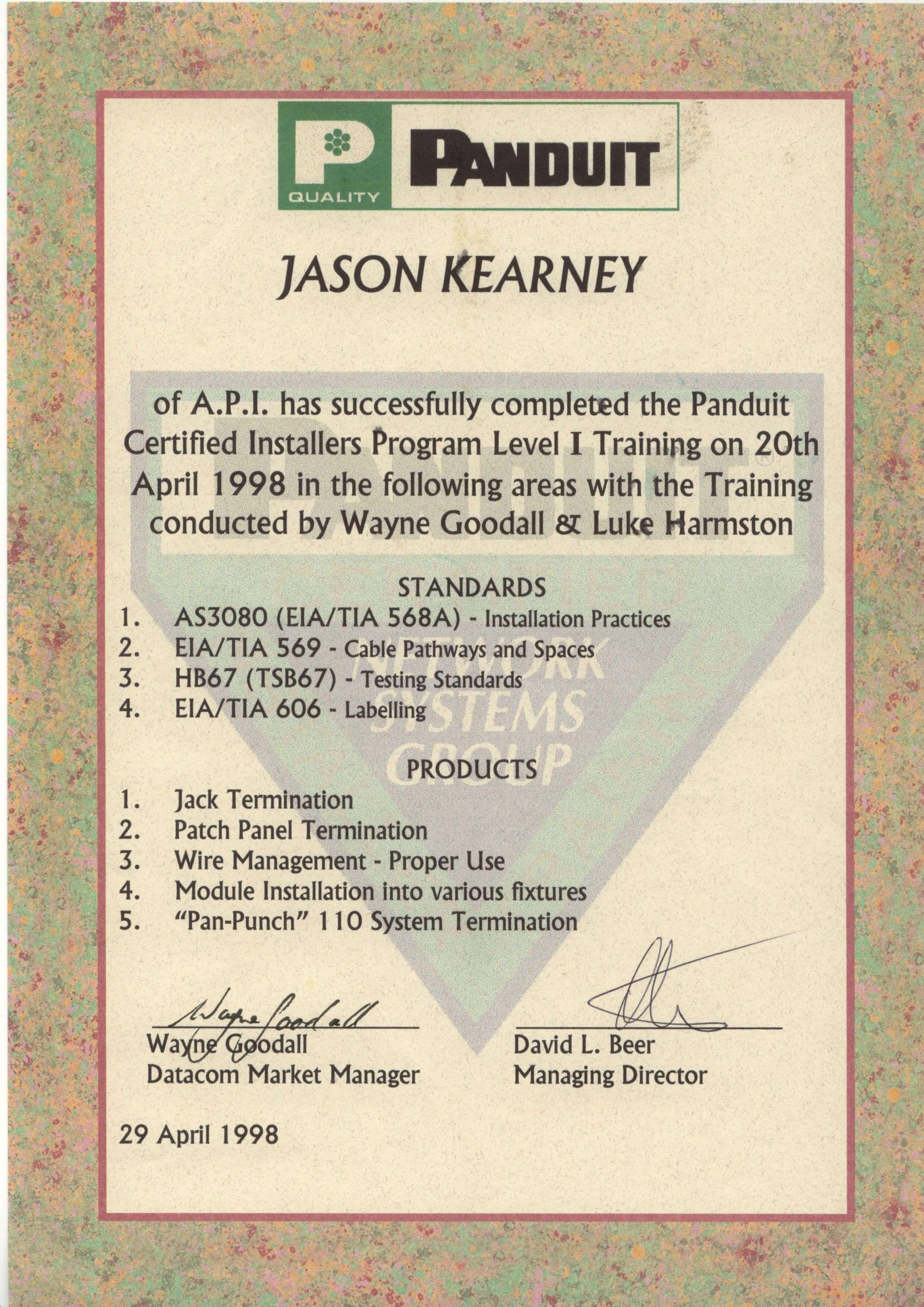
Secure A Com holds every licence and certification required to legally work on NBN and telecommunications infrastructure in Australia. Our master technicians are fully registered with ASIAL, an official national cabling registrar accredited by the Australian Communications and Media Authority (ACMA). When you book with us, you're engaging a properly registered cabler — not an unlicensed contractor. Click any certificate to view it in full.

JASON KEARNEY
Founder Jason Kearney is an Open Registered Cabler with 29 years of industry experience. In 1997, he was a manager for one of the first private contracting companies to work in the Telstra network following privatisation, leading the landmark CAN 2000 Project. Since establishing SECURE A COM in 2008, Jason has provided Sydney with independent, expert fault diagnosis and telecommunications solutions.




WHAT SYDNEY CUSTOMERS SAY
COMPANIES WE'VE WORKED FOR
From national banks to fast food chains — Sydney's biggest organisations trust us with their telecommunications infrastructure.


NBN · Data Cabling · Fibre · WiFi · Network Infrastructure











COMMON
MDF UPGRADE
QUESTIONS
Everything strata committees, building managers, and property owners ask us before booking an MDF upgrade assessment. If your question isn't here, call us directly on 02 9188 1577.
answered below
An MDF (Main Distribution Frame) upgrade involves replacing or significantly modifying the physical frame infrastructure inside a building's communications room — replacing legacy soldered frames or deteriorated disconnection modules, re-trunking cabling, and reorganising the frame to modern standards with clearly documented pair allocation.
The indicators that an MDF may need assessment or replacement include: persistent dropouts and repeated ISP port resets with no lasting fix; slow speeds inconsistent with the plan or line capability; intermittent faults that come and go across units; elevated line attenuation or noise margin fluctuations; sync rate instability at the modem or NTD; packet loss, jitter, or voice distortion on VoIP; audible crackling on copper voice circuits; cross-talk from poorly terminated or loosely dressed pairs; corrosion on pins or degraded solder joints in older soldered frames; physical damage to modules from impact or vibration; and water ingress or moisture-related oxidation within the frame.
We can come and assess your MDF to determine whether an upgrade is genuinely required or whether targeted jumpering will solve the issue. Not every building needs a full upgrade — our MDF jumpering service resolves most apartment connection issues without touching the frame itself.
Every MDF has two distinct sides. The A-side (also called the network side) is where the incoming cables terminate — copper pairs arriving from the street, or in FTTB NBN buildings, the NBN DPU (Distribution Point Unit) that converts the fibre signal to copper for in-building distribution. This side is owned and maintained by the network provider.
The B-side (the customer or distribution side) is where each apartment or unit's copper pair terminates — one pair per unit, running up through the building's riser cabling to individual apartment sockets. The B-side is owned by the building. A jumper cable connects a specific A-side port to a specific B-side pair, activating that unit's service. During an MDF upgrade, both sides must be fully mapped and documented before the old frame is removed, because the jumper connections between them determine which unit receives signal from which network port.
Pair mapping is the most labour-intensive part of any MDF upgrade — and the most important. We use an F-set (a line trace tool that travels the physical cable path) to trace each pair from the comms room to its termination point, whether that's a unit socket, an intermediate IDF (Intermediate Distribution Frame) on an upper floor, or an unused spur. We document each pair's origin on the A-side, its route through the building, and its destination on the B-side.
We never assume documentation is accurate. In every building we have worked in, at least some of the existing labels or records have been wrong. We verify every pair independently. Our case study from a Redfern MDF upgrade shows what this process looks like in practice — and what we found when we opened the comms room door.
It depends on the size of the building, the condition of the existing frame, and the number of pairs being upgraded. A small residential apartment block with 10–20 pairs can typically be completed in one day — including assessment, mapping, installation, and testing. Larger buildings with 40–80 pairs, multiple floors, or IDF sub-frames at intermediate levels may take 1–2 full days.
Very large commercial buildings with hundreds of pairs may be staged across multiple days to minimise disruption. The on-site assessment, which we conduct before quoting, gives us an accurate picture of what's involved. The quote we provide includes a realistic time estimate based on what we actually find in the comms room — not a generic estimate. Book an on-site assessment to get a precise timeline for your building.
Each pair is disconnected from the old frame and reconnected to the new frame one at a time, in sequence. No unit's service is interrupted until its replacement connection on the new frame is ready to be terminated. This means each unit experiences only a brief disconnection — the time it takes to remove that specific pair from the old termination point and reconnect it on the new frame — rather than a building-wide outage.
For very complex buildings where simultaneous access to upper-floor IDFs and the ground-floor MDF is required, we may coordinate a brief planned outage window in agreement with the building manager. In every case, we communicate the plan clearly before work begins. Our experience across commercial and residential buildings means residents rarely notice any interruption. If you need more information about how disruption is managed, contact us directly and we'll walk you through the process for your specific building.
The core of an MDF upgrade is replacing the frame's termination components — whether legacy soldered connections from the Telstra or PMG era, or deteriorated disconnection modules that have failed over time. Legacy soldered frames use timber-backed boards with copper pins; each pair is physically wrapped around a pin and soldered in place. Modern termination systems — Krone and equivalent brands — use insulation displacement connectors (IDC), requiring no soldering and providing more reliable, maintainable terminations compliant with current standards. In older buildings, we may also replace the physical frame itself if it's corroded, structurally compromised, or has suffered impact damage such as a vehicle reversing into the frame.
Depending on the building's condition, an upgrade may also include: re-routing of riser cables where they have deteriorated or become tangled, installation of cable management ducting inside the comms room, labelling systems for all pairs, and in some cases addition of a new IDF on upper floors where the distance from the ground-floor MDF is excessive. All equipment and materials are specified in your written quote before work begins — no surprises. If you'd like an idea of what this looks like, our Redfern MDF case study shows the before and after in detail.
Yes — the MDF is part of the building's shared infrastructure, which means any significant modification requires authorisation from the building owner, strata committee, or body corporate. For strata-titled buildings, this typically means a committee resolution approving the upgrade and the associated costs, which may need to be presented at a general meeting depending on the amount involved and your strata scheme's spending limits.
We are experienced in working with strata managers and body corporates to provide the information they need for committee approval — written scope of work, itemised quote, credentials (ACMA A10089, ACA 16598), and insurance certificates. We can attend building meetings to answer technical questions if required. Once approval is granted, we coordinate building access and schedule the work with minimal impact to residents. If your building also needs individual apartments assessed for internet fault finding as part of the project scope, we can include that in our proposal to the committee.
Complete, accurate MDF documentation is one of the most valuable deliverables of a proper upgrade — and the thing most often missing from buildings with ageing frames. After completing the upgrade, we provide the building manager with a full pair schedule: which A-side port connects to which B-side pair, which unit or tenancy each pair serves, and the physical label on the frame corresponding to each entry.
This documentation means that any future technician — whether an ISP contractor performing MDF jumpering or an NBN Co technician — can work from accurate records rather than guessing. Buildings with good MDF documentation have significantly fewer connection issues over time because contractors can make changes correctly rather than adding to the existing chaos of undocumented pairs. We provide documentation in a format suitable for laminating and mounting in the comms room as a permanent reference. Book an inspection to discuss what documentation delivery looks like for your building's specific setup.
MDF DUE FOR AN UPGRADE?
LET'S ASSESS IT.
BOOK AN INSPECTION.
Every MDF upgrade starts with an on-site assessment. We come to your building, inspect the comms room, map every pair on both sides of the frame, and give you an accurate written quote. No guesswork, no surprises, no connections lost.
Mon–Fri · After-hours by request · Sydney-wide coverage