02 9188 1577

INTERNET
TECHNICIAN
BLACKTOWN

FTTC, FTTN & HFC.
BLACKTOWN TO MOUNT DRUITT.

SECURE A COM internet technicians diagnose NBN faults across Blacktown LGA — FTTC, FTTN, HFC, and FTTP. The dominant fault pattern in Blacktown's newer suburbs is FTTC DPU dropout, where water ingress at the footpath pit causes a daily dropout cycle ISPs attribute to network maintenance. Open Registered Cabler A10089. 90% fixed same visit.

5-Star Google Rated
Open Registered Cabler · A10089 FTTC · FTTN · HFC · FTTP 90% Fixed Same Visit Trading Since 2008
Open Registered Cabler A10089
Registered Cabler ASIAL · ICAA Member
Since 2008 Sydney & Sutherland Shire
12-Month Guarantee All workmanship warranted
Video Evidence Watch on YouTube ↗
The Problem

WHY BLACKTOWN INTERNET FAULTS GO UNFIXED

The Blacktown LGA has one of the most diverse NBN technology mixes in Greater Sydney — FTTC across newer suburbs, FTTN through the 1970s–80s housing belt, HFC in older pockets, and FTTP in new estates. Each technology type has its own fault profile, and ISPs are poorly equipped to diagnose any of them beyond their own network boundary.

// PROBLEM 01

FTTC DPU Dropouts Misclassified as Network Maintenance

FTTC is the dominant NBN technology across Stanhope Gardens, The Ponds, Kings Langley, Acacia Gardens, and Woodcroft. The DPU sits in a footpath pit 50–300 metres from your premises — when pit seals fail, water reaches the copper pair terminals and produces intermittent dropouts. ISPs attribute these events to "network maintenance." We test insulation resistance from DPU pit to premises entry, dry the affected pair, and lodge the NBN Co pit referral.

// PROBLEM 02

ISP Scope Ends at the DPU

For FTTC, the ISP's responsibility ends at the DPU in the footpath pit. For FTTN, it ends at the node on your street. In both cases, the copper pair from street to wall socket is customer infrastructure — the exact cable section where Blacktown's most common faults occur. An ISP technician will not test insulation resistance between the network boundary point and your wall socket. We will.

// PROBLEM 03

FTTN Bridge Taps in Seven Hills and Toongabbie

Seven Hills, Old Toongabbie, Lalor Park, and Prospect were built in the 1970s–80s with 3–5 telephone extension sockets wired in parallel on the copper pair. Each unused socket is a bridge tap — an impedance load that attenuates VDSL2 signal. On FTTN, bridge taps compound node-distance attenuation. A Seven Hills property with a 400m run and 3 bridge taps can gain 12–18 Mbps on a 50 Mbps plan after tap isolation.

// PROBLEM 04

Apartment MDF Faults in Blacktown CBD and Mount Druitt

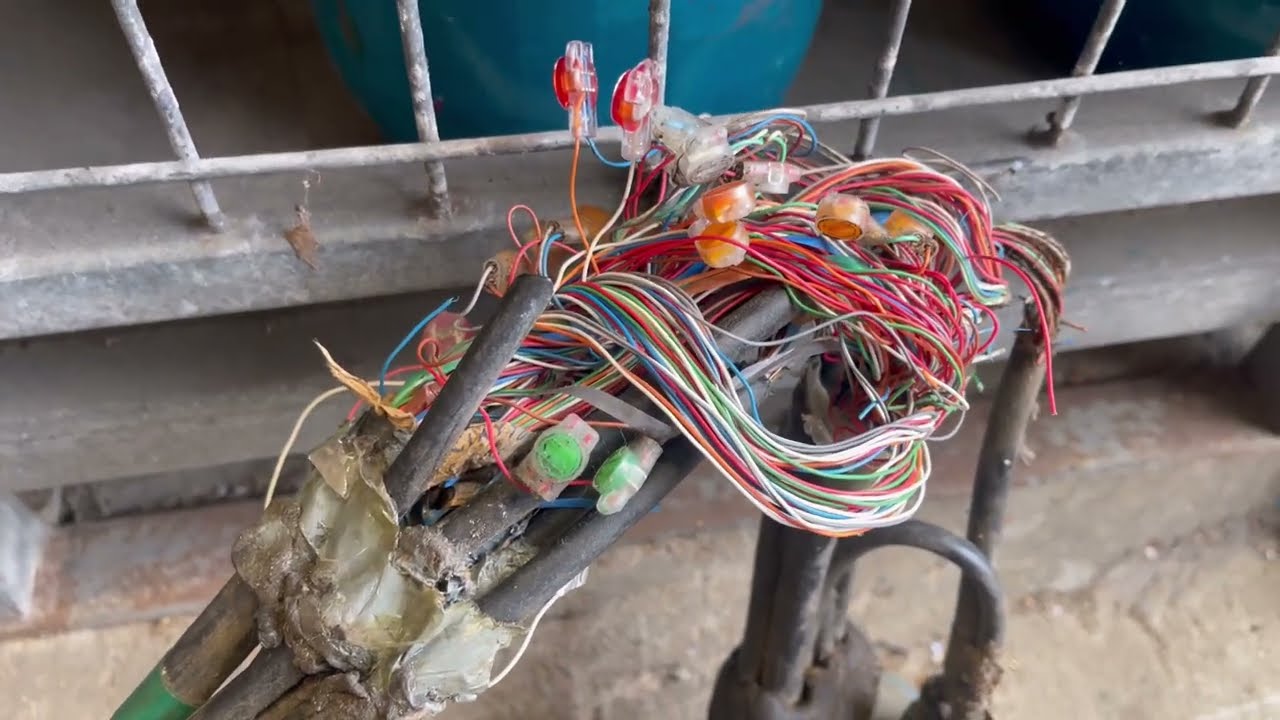
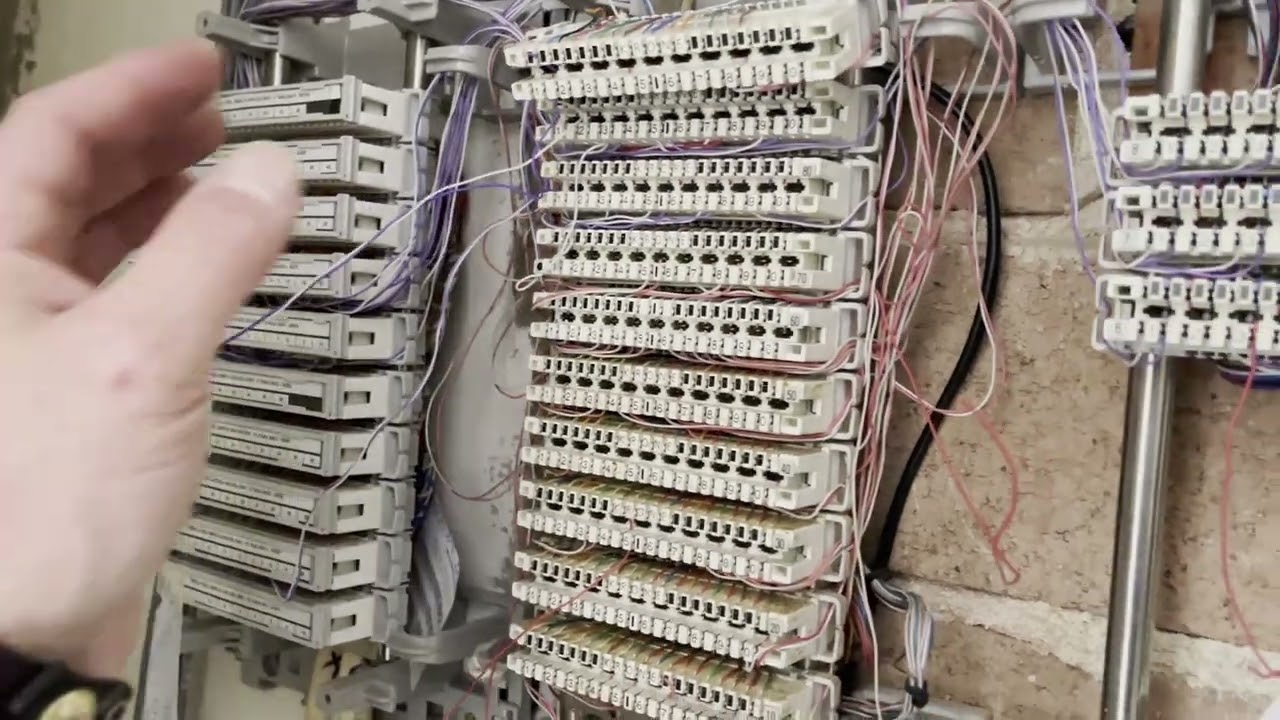
Unit blocks in Blacktown CBD, Mount Druitt, and Rooty Hill route NBN connections through a building MDF. Common faults: incorrect pair assignments, corroded Krone IDC blocks, water ingress at basement comms rooms, and failed riser cable sections. ISPs access the wall socket only — the MDF two floors below is never tested. We access building comms rooms, test the pair from MDF to unit, and repair on-site.

// PROBLEM 05

HFC Coax Degradation in Seven Hills and Prospect

Parts of Seven Hills, Prospect, and older Toongabbie received NBN via HFC — the same coaxial cable originally installed for Foxtel. Common HFC faults include degraded in-home coax splitters, corroded entry connectors, and water-damaged outdoor joints. ISPs attribute signal issues to "network congestion" without inspecting premises coax. We test signal levels at the wall socket, identify splitter attenuation or connector corrosion, and replace the faulty components on-site.

// PROBLEM 06

Dense Wi-Fi Interference Masking a Physical Line Fault

Blacktown's high-density areas — Stanhope Gardens estates, The Ponds, and Rooty Hill unit blocks — produce congested Wi-Fi environments where channel interference creates symptoms identical to a physical line fault. ISPs recommend router upgrades that don't resolve an underlying line problem. We test at the wall socket, separating line performance from wireless distribution. In many Blacktown properties we find both a physical fault and a Wi-Fi problem simultaneously.

The Solution

YOUR INDEPENDENT INTERNET TECHNICIAN —
SERVICING ALL BLACKTOWN LGA

SECURE A COM is an independent, Open Registered Cabler (A10089) based in Miranda, Sutherland Shire — approximately 55–65 minutes from Blacktown. We attend on-site with professional test equipment: FTTC insulation resistance testing, TDR for FTTN bridge tap location, coax signal level meters, and full MDF access for apartment buildings. FTTC DPU dropout diagnosis across Stanhope Gardens and The Ponds; FTTN bridge tap isolation in Seven Hills and Lalor Park; MDF repair in Blacktown and Mount Druitt unit blocks.

Book a Blacktown Technician
FTTC DPU dropout diagnosis — insulation resistance testing from pit to premises, NBN Co referral lodged where required — Stanhope Gardens, The Ponds, Acacia Gardens, Quakers Hill
FTTN bridge tap location and isolation using TDR — Seven Hills, Old Toongabbie, Lalor Park, Prospect, Doonside
Apartment MDF access, pair testing, and Krone block repair — Blacktown CBD, Mount Druitt, Rooty Hill unit blocks
HFC coax signal level testing, splitter replacement, and connector repair — Seven Hills, Prospect, Toongabbie
Wall socket speed test to separate physical line fault from Wi-Fi interference — high-density Blacktown estates and apartment buildings
90% of Blacktown faults resolved on-site in a single visit
Real Jobs · Real Faults · Real Evidence

WATCH US EXPOSE THE REAL FAULT

These aren't staged demos. Every video is a real Sydney job where we were called in after the ISP said nothing was wrong — and found exactly what they missed. Watch the full diagnostic process, on camera.
18+ Years Experience
5.0★ Google Rated
90% Fixed Same Visit
12M Workmanship Guarantee
NBN technician exposing faulty socket installed by ISP contractor — customer wrongly blamed for slow speeds
NBN Socket Fault · ISP Accountability

They Blamed the Customer's Cabling — But the Real Fault Was on Their Side

Faulty socket installed by NBN, incorrect termination causing speed loss, and cross-talk at the MDF — all blamed on the customer's internal wiring. After our fix: 10 Mbps from the router jumped to over 100 Mbps directly from the socket.

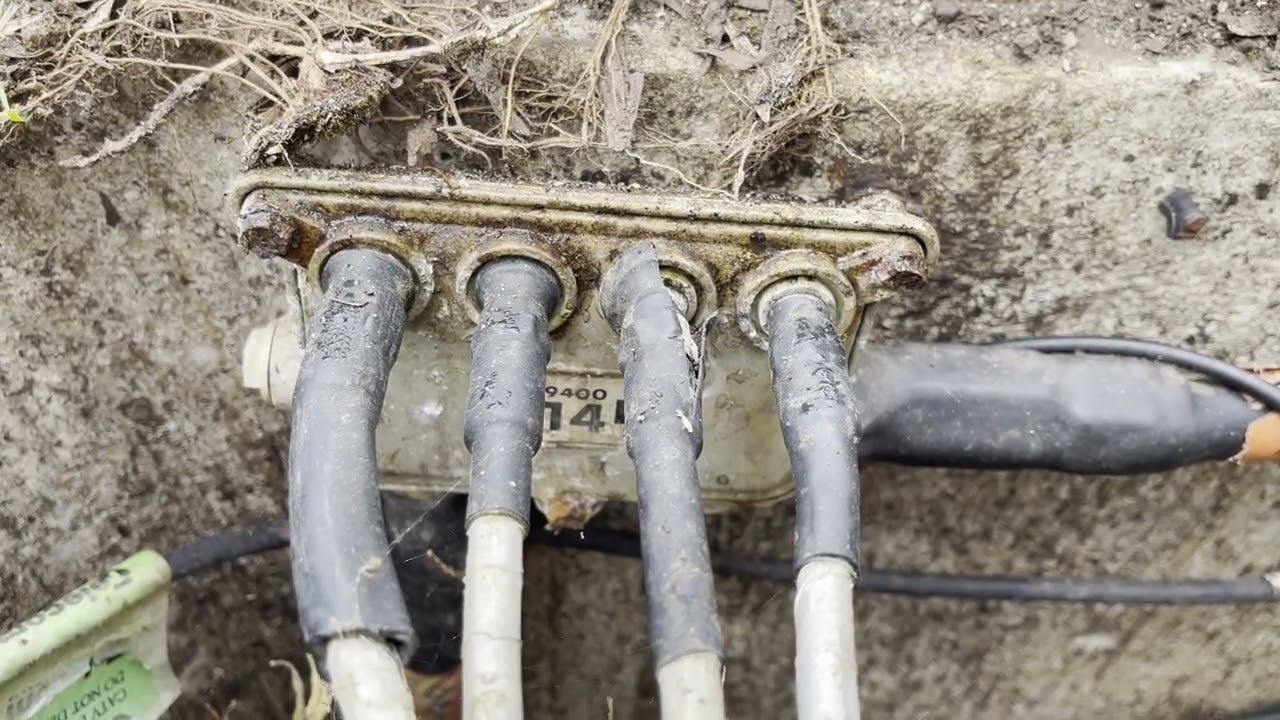
Corroded HFC street tap causing NBN dropouts in rain — Penshurst NSW infrastructure fault
NBN HFC Fault · Penshurst NSW

NBN HFC Drops Out When It Rains? This 10-Year Fault Finally Makes Sense

Ten years of intermittent dropouts during rain and hot weather — NBN kept closing the job as "resolved." On site we found severe corrosion on the street HFC tap, rusted pit hardware, and water ingress confirmed as the cause. Now escalating to force infrastructure replacement.

Seen enough? Experiencing something similar? Book a Technician See all our videos on YouTube
Services Available in Blacktown

INTERNET & TELECOM SERVICES

SECURE A COM provides on-site internet technician services across the entire Blacktown LGA. FTTC, FTTN, HFC, and FTTP fault diagnosis for houses, units, and apartment buildings. No travel surcharge for any Blacktown LGA suburb.

Get a Quote
Internet Technician — NSW Coverage

Internet Technician NSW (All Locations)

View the full NSW internet technician page — covering Greater Sydney and regional locations. FTTC, FTTN, HFC, and FTTP fault diagnosis across New South Wales, wherever you need an independent licensed technician.

View NSW internet technician service
Fault Repair

NBN Fault Repair Blacktown

FTTC DPU dropouts, FTTN bridge taps, HFC coax faults, and apartment MDF issues diagnosed and repaired on-site. All faults identified with professional test equipment and resolved within a single $250 service call where possible.

NBN fault repair services
Fault Repair

Internet Fault Finding Blacktown

Slow internet, NBN dropouts, or intermittent connection across Blacktown and surrounding suburbs. We identify the physical cause at the wall socket — separating line faults from Wi-Fi interference before recommending any fix.

Internet fault finding services
Fault Repair — ISP Disputes

Private NBN Technician

ISP says "network maintenance" while your FTTC connection drops out daily. We investigate what ISPs won't: DPU pit water ingress, FTTN bridge taps, apartment MDF faults, and HFC coax degradation — independent and on-site.

Hire a private NBN technician
MDF Services

MDF Jumpering Blacktown

Unit blocks in Blacktown CBD, Mount Druitt, and Rooty Hill have building MDFs where incorrect pair assignments and corroded Krone blocks cause internet faults the ISP can't reach from the unit wall socket.

MDF jumpering services
Fault Repair

Phone Line Repair Blacktown

Crackling landline, no dial tone, or VoIP faults on your NBN phone service. We diagnose and repair copper phone line faults across Blacktown LGA — houses, units, and apartment buildings included.

Phone line repair services
WiFi & Networking

WiFi Solutions Blacktown

After resolving the physical line fault, Blacktown's high-density environments — apartment blocks, packed townhouse estates, thick brick veneer walls — need proper wireless coverage. We assess and install wired access points or mesh Wi-Fi.

Fix WiFi coverage problems
Installation

Data Cabling Blacktown

Cat 6 data cabling for hardwired Ethernet points throughout your Blacktown property. Particularly effective in brick veneer houses and apartment buildings where Wi-Fi is congested or speeds through walls are unreliable.

Data cabling installation
How It Works

FROM YOUR FIRST CALL TO FIXED — ACROSS BLACKTOWN

Getting your internet fault diagnosed and fixed is straightforward. Here's exactly what happens when you book an internet technician with SECURE A COM across Blacktown.

01
Step 01

Book Online — Tell Us Your Connection Type, Suburb, and Whether You're in a House, Unit, or Apartment Block

Book online or call 02 9188 1577. Tell us your connection type (FTTC, FTTN, HFC, or FTTP), your suburb, and what's happening — dropouts, slow speeds, or intermittent connection. Mention your property type: older Blacktown homes with telephone extensions often have FTTN bridge tap faults; newer FTTC estates have DPU dropout issues; apartment blocks often have MDF comms room faults.

Book online or by phone FTTC, FTTN, HFC, FTTP Houses, units, apartments No tech jargon needed
02
Step 02

We Confirm Your Appointment — Specific Arrival Window for Blacktown

We confirm a specific arrival window — not a half-day block. We travel from our Miranda base with full professional test equipment, ready to diagnose on-site. For apartment buildings, let us know at booking so we can pre-arrange comms room access.

Specific arrival window Mon–Fri service calls Building access pre-arranged where needed All Blacktown LGA suburbs
03
Step 03

On-Site Fault Diagnosis — Tailored to Blacktown's Specific Technology Mix

We diagnose to your connection type. For FTTC — dominant in Blacktown's newer suburbs — we test speed at the NTD and inspect the DPU pit for water ingress and insulation resistance failure. For FTTN in Seven Hills and Lalor Park, TDR scanning locates every bridge tap with exact distance readings. For HFC, we measure coax signal level at the wall socket. For apartment blocks, we test from the MDF through the riser to your unit socket.

FTTC DPU pit inspection and insulation resistance testing FTTN TDR bridge tap scan HFC coax signal level measurement Apartment MDF pair testing
04
Step 04

Repair Carried Out On-Site — Same Visit

In 90% of cases we repair on the same visit. For FTTC DPU water ingress — the most common Blacktown fault — we dry the copper pair and restore insulation resistance. Where the DPU pit needs permanent repair, we lodge an NBN Co referral with your test measurements attached. For FTTN bridge taps, we disconnect inactive extension sockets at the wiring junction and terminate correctly. For HFC, we replace the degraded coax splitter. For apartment MDF faults, we re-punch the Krone block and verify pair assignment.

FTTC DPU pair drying and entry seal — NBN Co referral lodged with measurements FTTN bridge tap isolation at junction points HFC coax splitter replacement Apartment MDF Krone block repair and pair assignment correction
05
Step 05

Speed Verified, Results Explained, 12-Month Guarantee Issued

Before leaving, we re-test speed at the wall socket or NTD and confirm the fault is resolved — showing you before-and-after readings where applicable. We explain exactly what was found and what happens next, in plain language. Every repair includes a 12-month workmanship guarantee. Same fault recurs within 12 months, we return at no charge. Full terms at secureacom.com.au/terms-conditions

Post-repair speed test and dropout monitoring Plain-English results debrief NBN Co referral documentation provided where applicable 12-month guarantee
// Travel & Coverage Note

Based in Sutherland Shire — We Travel to Blacktown Regularly

SECURE A COM is based in Miranda, Sutherland Shire — approximately 55–65 minutes from Blacktown. We service this LGA regularly: FTTC DPU dropout faults in the newer estates and FTTN bridge tap faults in the established 1970s–80s housing stock are patterns we see frequently across Greater Western Sydney. All Blacktown LGA suburbs are within our standard Greater Sydney service area — no travel surcharge applies. See our Terms & Conditions for full details.

Based in Miranda, Sutherland Shire Blacktown area — approx 55–65 min from base No travel surcharge — all Blacktown LGA suburbs Est. 2008

// Ready to book your on-site Blacktown diagnosis?

Book a Blacktown Internet Technician Mon–Fri · FTTC, FTTN, HFC & FTTP Serviced · 90% Fixed Same Visit
Pricing

ONE PRICE. NO SURPRISES.

One fixed rate covers your full on-site diagnostic and repair across the Blacktown LGA — Blacktown, Seven Hills, Quakers Hill, Stanhope Gardens, The Ponds, Rooty Hill, Mount Druitt, Doonside, Woodcroft, Kings Langley, and all surrounding suburbs. No travel surcharge for any Blacktown LGA suburb.

Fixed Rate — No Hidden Charges
$ 250
inc. GST · Blacktown LGA service call

One hour on-site with a licensed Open Registered Cabler. Full fault diagnosis and on-site repair where possible. No travel surcharge for any Blacktown LGA suburb — all areas within our standard Greater Sydney service area.

What's included
One hour on-site with an Open Registered Cabler (A10089)
Travel from Miranda — no surcharge for any Blacktown LGA suburb (standard Greater Sydney service area)
Full fault diagnosis — FTTC DPU insulation resistance testing, FTTN TDR bridge tap scan, HFC coax signal level measurement, or apartment MDF pair testing depending on your connection type and property
On-site repair where possible — bridge tap isolation, FTTC pair drying and entry seal, HFC splitter replacement, Krone block repair and re-termination
Minor consumables included — wall plates, cable clips, patch leads, short cable lengths, standard coax connectors
ISP fault report and NBN Co referral documentation if the fault is confirmed as network-side or DPU infrastructure
Book a Blacktown Technician
12-month workmanship guarantee on all repairs
Pricing FAQs

COMMON PRICING QUESTIONS

The $250 (GST inclusive) covers one hour on-site with an Open Registered Cabler, travel from our Miranda base (no travel surcharge for any Blacktown LGA suburb), and a full internet diagnostic tailored to your connection type. For FTTC connections in Stanhope Gardens, The Ponds, Acacia Gardens, Quakers Hill, and Woodcroft, this includes DPU pit inspection and insulation resistance testing on the copper pair from the pit to your premises — the exact test your ISP has never performed. For FTTN connections in Seven Hills, Old Toongabbie, Lalor Park, and Prospect, this includes TDR bridge tap scanning and insulation resistance testing. For apartment buildings in Blacktown CBD and Mount Druitt, this includes access to the building comms room and pair testing from MDF to unit socket. Most standard Blacktown residential faults are diagnosed and repaired within the included first hour.
No — there is no travel surcharge for any suburb within the Blacktown LGA. Blacktown, Seven Hills, Quakers Hill, Stanhope Gardens, The Ponds, Acacia Gardens, Kings Langley, Rooty Hill, Mount Druitt, Doonside, Woodcroft, Prospect, Arndell Park, Lalor Park, Old Toongabbie, Riverstone, Marsden Park, Schofields, Colebee, The Ponds, and all surrounding Blacktown LGA suburbs are within our standard Greater Sydney service area — the $250 fixed rate covers everything including travel from our Miranda base. See our Terms & Conditions for full service area details.
If your fault requires more than an hour — for example, an apartment building where accessing the comms room and tracing the full MDF-to-unit pair path takes additional time, or a multi-fault diagnosis where a FTTC dropout issue and a Wi-Fi distribution problem both require separate investigation — we continue at our standard hourly rate. We'll always advise before additional time is billed. The vast majority of standard Blacktown residential faults — FTTC DPU dropout diagnosis, FTTN bridge tap isolation in houses, and HFC coax splitter replacement — are diagnosed and completed within the first included hour. Apartment MDF faults sometimes require slightly more time depending on building complexity.
Minor consumables are included in the service call — wall plates, cable clips, patch leads, standard Krone IDC blocks, short patch cable lengths, and standard coaxial connectors and compression fittings. If your fault requires additional materials beyond these — a replacement coax splitter for HFC connections, a section of outdoor-rated patch cable, or a replacement Krone block module for an apartment MDF — these are quoted separately before any work proceeds. You'll never be billed for materials without prior agreement.
The $250 fee covers the full on-site diagnostic and documentation regardless of outcome. For FTTC connections where we determine the fault is in the DPU itself or in the NBN Co pit infrastructure rather than the premises copper pair — you'll leave with a complete fault report and a formal NBN Co referral lodged on your behalf, including our measured test data. This is substantially more effective than a customer complaint alone because it includes the specific insulation resistance measurements and fault location data that NBN Co field teams can act on directly. Where the fault is network-side for FTTN or HFC connections, we provide equivalent ISP escalation documentation.
Yes — we service apartment buildings and unit complexes throughout the Blacktown LGA, including Blacktown CBD apartments, Mount Druitt town centre units, and the various unit blocks across Rooty Hill, Doonside, and Woodcroft. For apartment buildings we need access to the building's communications room (MDF room), which is usually located in the basement or ground floor. This sometimes requires prior arrangement with a building manager or strata — let us know when you book and we can advise on access requirements. The $250 fixed rate applies to apartments in the same way as houses, with no additional fee for building access or MDF work within the included hour.
Licences & Credentials

LICENSED. CERTIFIED. ACCOUNTABLE.

Secure A Com holds every licence and certification required to legally work on NBN and telecommunications infrastructure in Australia. Our master technicians are fully registered with ASIAL, an official national cabling registrar accredited by the Australian Communications and Media Authority (ACMA). When you book with us, you're engaging a properly registered cabler — not an unlicensed contractor. Click any certificate to view it in full.

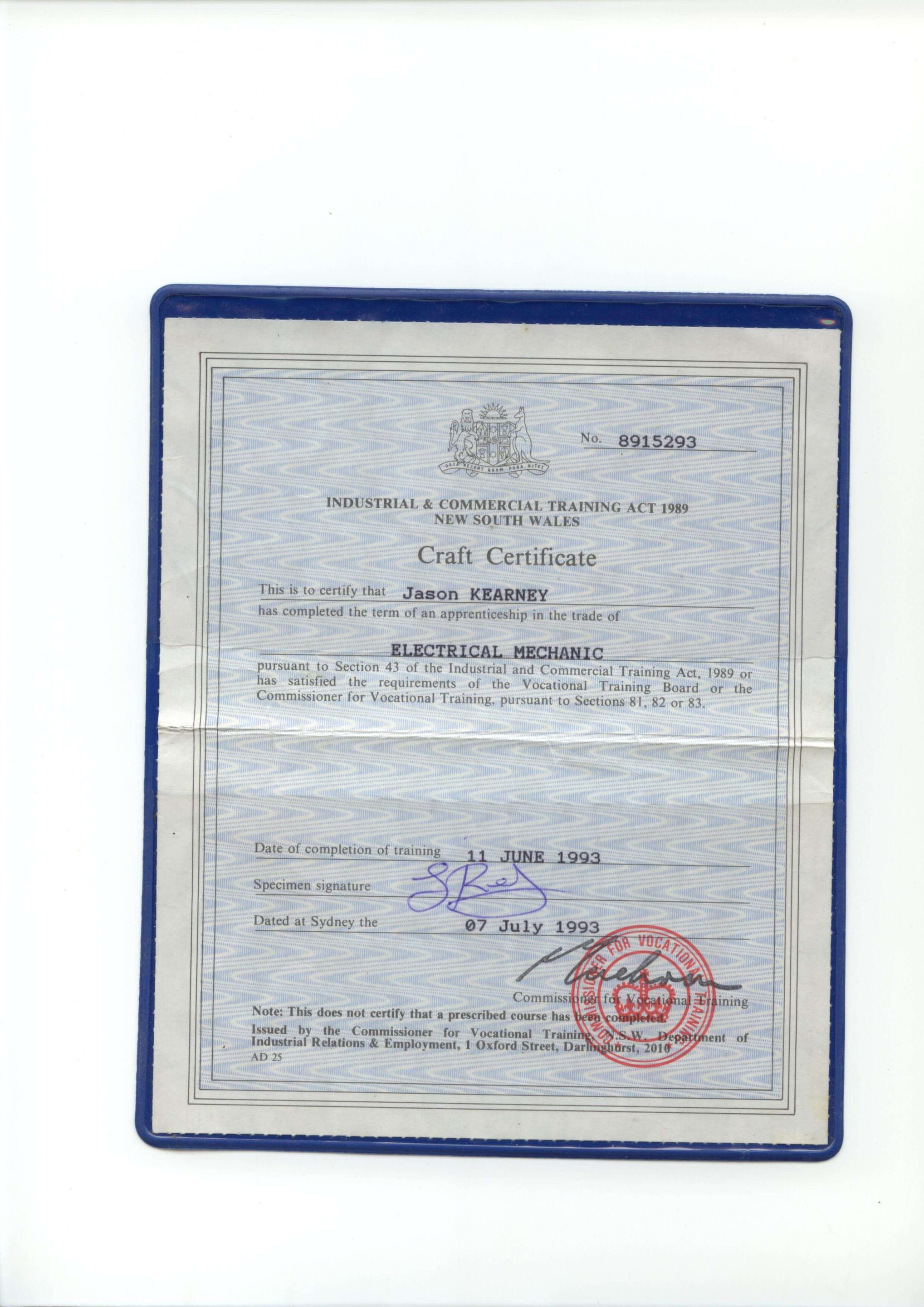
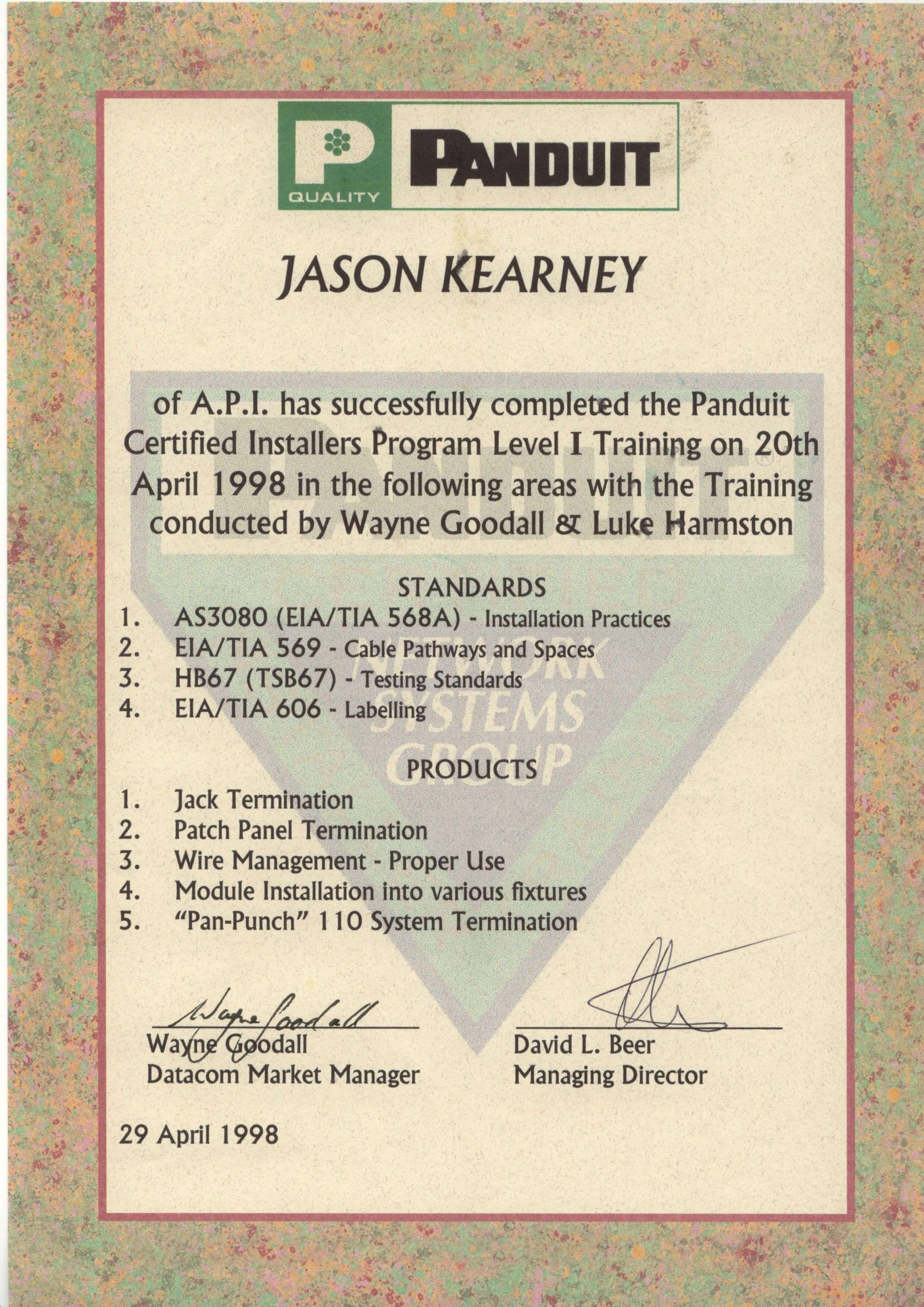
Open Registered Cabler — A10089 Australian Communications Authority — Licence 16598 Telstra Contractor — CID 90024185 Telstra Install & Maintenance — DC0051 Electrical Craft Certificate — 8915293 Data Cabling — AS3080 ABN 78 130 056 987
Jason Kearney — Founder & Master Technician, SECURE A COM
// Founder & Master Technician

JASON KEARNEY

Founder Jason Kearney is an Open Registered Cabler with 29 years of industry experience. In 1997, he was a manager for one of the first private contracting companies to work in the Telstra network following privatisation, leading the landmark CAN 2000 Project. Since establishing SECURE A COM in 2008, Jason has provided Sydney with independent, expert fault diagnosis and telecommunications solutions.

Jason Kearney signature Read my full profile →
Open Cabler Registration Licence A10089
Open Cabler Registration
ASIAL (ACMA-accredited registrar) — A10089
Cabler Registration Certificate
Australian Cabler Registration
ASIAL Member
Australian Communications Authority Licence 16598
Australian Communications Authority
Licence 16598
Regulatory Framework Licence
Milcom
Telstra Install and Maintenance Certificate DC0051
Telstra Install & Maintenance
Certificate DC0051
Telstra Copper Jointing Certificate
Telstra Copper Jointing
Certificate
Telstra Contractor Accreditation CID 90024185
Telstra Contractor Accreditation
CID 90024185
Telstra Lines Manager Certificate
Telstra Lines Manager
Certificate
Electrical Craft Certificate 8915293
Electrical Craft Certificate
Licence 8915293
Data Cabling Certification AS3080
Data Cabling Certification
AS3080
Bonded Asbestos Removal Certificate
Bonded Asbestos Removal
Certificate
Sydney Tunnel Induction
Certificate
// Registered Australian Business
ABN 78 130 056 987
Verify on ABR →
Customer Reviews

WHAT SYDNEY CUSTOMERS SAY

5.0
128 Google Reviews
Google Reviews Verified customer feedback
Leave a Review
Trusted By

COMPANIES WE'VE WORKED FOR

From national banks to fast food chains — Sydney's biggest organisations trust us with their telecommunications infrastructure.

NBN · Data Cabling · Fibre · WiFi · Network Infrastructure

We diagnose faults across all Australian ISPs
FAQ

COMMON QUESTIONS ABOUT OUR BLACKTOWN SERVICE

Questions from Blacktown residents about NBN dropout diagnosis, FTTC DPU faults, FTTN bridge taps in older Blacktown houses, apartment MDF faults, and how an independent internet technician differs from what your ISP provides.

FTTC (Fibre to the Curb) NBN uses a Distribution Point Unit — a small device in a concrete pit on the footpath near your property — connected to your premises by a short copper run. This technology is significantly less susceptible to distance-related attenuation than FTTN because the copper run is only 50–300 metres rather than several hundred metres to a distant node. However, the DPU pit is the vulnerability: Blacktown's underground pits are the same concrete infrastructure used for all Telstra network assets, and they suffer from water ingress when pit seals fail or when sustained heavy rainfall overwhelms pit drainage. Water reaching the copper pair terminals inside the pit causes intermittent moisture-related pair faults — when the moisture is light, the connection degrades but stays connected; when more severe, it causes disconnect events. ISPs classify these events as "network maintenance" or "equipment resets" because from their network monitoring systems, the DPU appears to resync — but the cause is a physical water ingress fault at the pit, not a network upgrade or planned maintenance. The cycle repeats because the moisture evaporates between rainfall events, temporarily restoring the connection, only to recur with the next rain. The fix requires testing insulation resistance on the copper pair and identifying whether the degradation source is the pit itself (NBN Co infrastructure) or the cable run from the pit to your house entry (customer infrastructure). We do both tests on-site and act on each accordingly.
The Blacktown LGA has a mix of NBN technologies reflecting its combination of older established suburbs and newer greenfield residential developments. FTTC (Fibre to the Curb) covers Blacktown's newer residential estates — Stanhope Gardens, The Ponds, Acacia Gardens, and parts of Quakers Hill, Woodcroft, and newer Blacktown sections. FTTN (Fibre to the Node) covers the established Blacktown suburbs built in the 1960s–80s — Seven Hills, Old Toongabbie, Lalor Park, Prospect, Blackett, Doonside, and older sections of Mount Druitt and Rooty Hill. HFC (Hybrid Fibre-Coaxial) covers some areas where the NBN runs on the existing Foxtel/pay TV coaxial cable network — parts of Seven Hills and Prospect in particular. FTTP (Fibre to the Premises) covers the newest greenfield estates — Marsden Park, Colebee, newer Riverstone and Schofields stages. FTTB (Fibre to the Building) covers apartment blocks in Blacktown CBD and some multi-dwelling unit complexes. When you book, tell us your suburb and property type and we'll confirm the most likely technology and fault profile before we arrive.
Seven Hills, Old Toongabbie, and Lalor Park are predominantly FTTN areas, and the most common cause of persistent below-plan speeds in these suburbs is bridge tap attenuation from telephone extension sockets. Houses built in the 1970s and 1980s — which make up the majority of housing in Seven Hills and Old Toongabbie — were wired with three to five telephone sockets as standard: one in the kitchen or hallway, one per bedroom, and often one in the living room. These sockets are all wired in parallel on the copper pair. Each socket that remains connected to the pair even though unused is a bridge tap — an additional impedance load that attenuates the VDSL2 signal being used for NBN FTTN. ISPs attribute slow speeds to node distance or general network characteristics and close the ticket. But bridge tap attenuation is the additional removable component that ISPs never test for. We use TDR scanning to locate every bridge tap on your pair and isolate them at the junction points — sockets remain physically in place but are disconnected from the pair. Seven Hills and Old Toongabbie FTTN properties with 3–4 bridge taps typically gain 12–18 Mbps on a 50 Mbps plan after isolation, without any change to the NBN infrastructure.
Apartment buildings receive NBN via their building infrastructure rather than individual connections to each unit. The NBN connection enters the building and terminates at the MDF (Main Distribution Frame) — a distribution frame in the building's communications room (usually in the basement or ground floor). From the MDF, copper pairs run through the building's riser cable to individual unit sockets. For NBN FTTN or FTTB connections in apartment buildings, faults can occur at the MDF itself — specifically at the Krone IDC punch-down blocks where the NBN pair is terminated. Common MDF faults include: corroded Krone blocks causing high-resistance connections; incorrect pair assignments where the NBN pair connected to one unit's wall socket is cross-connected to a different unit at the MDF; and water ingress at basement-level comms rooms during heavy rainfall. ISPs visit your unit, check the wall socket connection, and if the NTD appears to sync they close the ticket — without ever looking at the MDF in the comms room. We access the building comms room (with building manager access if required), test the pair from the MDF block through to your unit's wall socket using line testing equipment, identify the specific fault point, and repair it on-site. For strata buildings, we'll advise if the strata manager needs to be notified before MDF access.
Yes — a Blacktown internet fault that worsens during or after rain and then partially recovers in dry weather is a very strong indicator of moisture-related insulation resistance degradation on the copper pair. For FTTC connections, the most common source is exactly what you've identified: the DPU pit on the footpath. When the pit seal fails and water enters during rain, it contacts the copper pair terminals at the DPU, causing the pair's insulation resistance to drop. As the water in the pit evaporates over the following days, insulation resistance partially recovers and the connection improves — until the next rain event. For FTTN connections in Seven Hills or Old Toongabbie, a wet-weather fault more commonly indicates insulation resistance degradation in the lead-in cable where it enters the house — at the external conduit entry point, water can track inside the conduit and pool at the junction inside, degrading the pair. In either case, a fault that tracks closely with rainfall events is diagnosable on-site: we test insulation resistance at the DPU pit entry, along the copper pair, and at the premises entry point to identify exactly where the moisture is coming in, and repair or refer the fault accordingly.
ISP technicians are fundamentally limited by their scope of work. For FTTC connections — the most common technology in Blacktown's newer suburbs — ISP technicians do not attend your premises at all: FTTC diagnosis is performed remotely from the ISP's systems, where they can see DPU sync status but cannot assess what's happening on the copper pair between the DPU pit and your premises. For FTTN connections, ISP technicians confirm the node is syncing and may check the NTD connection at your wall socket, but their investigation stops at the network boundary — they will not test the copper pair between the node and your wall socket. They will not carry TDR equipment, will not carry insulation resistance meters, and cannot locate or isolate bridge taps or water ingress faults on your premises cabling. For apartment buildings, ISP technicians visit the unit socket but cannot access the building MDF — that requires strata or building manager access arrangements that ISPs don't make. An independent internet technician from SECURE A COM works exclusively for you. We carry insulation resistance meters, TDR equipment, VDSL2 analysers, and coax signal level meters. We test the copper pair from the DPU pit or FTTN node to your wall socket, access building MDFs, and find the physical fault the ISP has never tested for. We are a fully licensed Open Registered Cabler (A10089) authorised to work on all customer-side telecommunications cabling.
HFC (Hybrid Fibre-Coaxial) NBN uses the coaxial cable network originally installed for Foxtel and cable pay TV services. HFC performs well when the coaxial cabling is in good condition, but older HFC properties in Seven Hills and Prospect have specific fault types. The most common is coax splitter degradation: when HFC was originally installed, properties with multiple rooms that needed Foxtel had coaxial splitters installed to distribute the signal. Splitters age and degrade — the signal loss through a splitter increases as the splitter corrodes internally, and a splitter that was fine for Foxtel signal levels can be too lossy for the HFC NBN signal. A single degraded splitter between the network connection point and your wall socket can significantly reduce your HFC NBN connection quality. Corroded coaxial connectors at the house entry point — particularly the F-connector that connects the external cable to the internal premises wiring — are another common fault. We measure coaxial signal level at your wall socket and compare against the expected level for a direct connection, identifying the attenuation introduced by splitters or corroded connectors and replacing the faulty component on-site. ISPs attribute HFC signal quality issues to "congestion" or "node sharing" — without ever testing the coax signal level inside your property.
We travel to Blacktown from our Miranda base in Sutherland Shire — central Blacktown and Seven Hills are approximately 55–60 minutes, Stanhope Gardens and The Ponds approximately 60 minutes, Quakers Hill approximately 60–65 minutes, Mount Druitt and Rooty Hill approximately 55–60 minutes, and Riverstone and Marsden Park approximately 65 minutes. We typically have appointments available within one to three business days and confirm a specific arrival window rather than a vague half-day block. We service all Blacktown LGA suburbs with no travel surcharge — Blacktown, Seven Hills, Quakers Hill, Stanhope Gardens, The Ponds, Acacia Gardens, Kings Langley, Rooty Hill, Mount Druitt, Doonside, Woodcroft, Prospect, Arndell Park, Lalor Park, Old Toongabbie, Riverstone, Marsden Park, Schofields, Colebee, Blackett, Bidwill, Emerton, Shalvey, and all surrounding suburbs. Call 02 9188 1577 or book online.
Ready to book an on-site Blacktown internet diagnosis? FTTC, FTTN, HFC & FTTP serviced — Blacktown, Seven Hills, Stanhope Gardens, The Ponds, Quakers Hill, Mount Druitt, and all Blacktown LGA suburbs.
Book a Technician

BLACKTOWN'S
INTERNET TECHNICIAN.
LET'S FIX IT TODAY.

FTTC dropouts in Stanhope Gardens or The Ponds that the ISP calls "network maintenance." FTTN speeds in Seven Hills or Old Toongabbie that bridge taps are quietly stealing. An apartment MDF fault in Blacktown or Mount Druitt the ISP can't see from your wall socket. HFC coax degradation in Seven Hills that "congestion" doesn't actually explain. We attend on-site across all Blacktown LGA — $250 fixed, 90% resolved same visit, 12-month workmanship guarantee.

Open Registered Cabler · A10089 90% Fixed Same Visit 12-Month Guarantee Trading Since 2008

Pin It on Pinterest