
INTERNET
TECHNICIAN
SYDNEY
CBD
FTTB APARTMENTS.
COMMS ROOM TO YOUR UNIT.
An internet technician from SECURE A COM diagnoses NBN faults across Sydney CBD — servicing FTTB apartment towers from Circular Quay and The Rocks to Haymarket, Barangaroo, and Darling Harbour. We specialise in FTTB building wiring diagnosis in CBD high-rise residential towers where ISPs confirm the comms room NTD is syncing at full speed but the internal building cable to your apartment cannot carry the signal. An Open Registered Cabler (A10089) attends on-site with comms room access equipment, with 90% of CBD apartment faults resolved in a single visit.
WHY SYDNEY CBD APARTMENT INTERNET FAULTS GO UNFIXED
Sydney CBD's residential building stock ranges from 1980s apartment tower conversions with original telephone-grade internal wiring to purpose-built FTTB high-rises where fibre delivers a full 100 Mbps signal to the building comms room — but the cable between the comms room and your apartment was never designed to carry it. Across every building era, ISPs consistently close tickets after confirming the comms room network equipment is syncing, without testing the internal building infrastructure that is actually the fault.
FTTB Comms Room NTD Syncing Fine — ISP Closes Ticket Without Testing Internal Building Wiring
Under the FTTB (Fibre to the Building) architecture, optical fibre runs to a network equipment rack in the building's communications room. The NBN NTD (Network Termination Device) in the comms room connects to the ISP's network and in most Sydney CBD apartment buildings it syncs at the full plan speed — 50 Mbps, 100 Mbps, or 250 Mbps — without issue. The ISP performs a remote test on the NTD, observes a normal sync, and closes the ticket. What the ISP does not test is the cabling path from the comms room through the building to your apartment wall socket. In 1990s and early 2000s CBD apartment towers, this internal cable is often Category 3 telephone cable — the same wiring used for landline telephone extensions before structured cabling was standardised for data. Cat 3 cable has a bandwidth ceiling of approximately 16 MHz and cannot reliably carry Gigabit Ethernet or even 100 Mbps Fast Ethernet over typical building distances. The NTD syncs. You get no internet. The ISP says the problem is on your side. It isn't — it's between the comms room and your apartment, and your ISP will not access it.
Legacy Cat 3 Cable Runs in 1980s–1990s CBD Apartment Towers — Cannot Carry NBN Plan Speeds
Sydney CBD has a large number of residential apartment buildings that were originally constructed for commercial or mixed use and converted to residential — or purpose-built residential towers from the late 1980s and 1990s — during a period when Cat 3 telephone cable was the standard for all telecommunications wiring within buildings. This cable was installed in structured wiring bundles from a main distribution frame (MDF) or a centralised comms room, with individual runs to each apartment's telephone outlet. When the NBN FTTB rollout occurred, installers terminated the new NTD in the existing comms room and used the existing internal telephone cabling to deliver the connection to each apartment — because installing new cable was not within the NBN installation scope. Cat 3 cable suffers progressive signal degradation over longer runs and at higher frequencies. In a 20-storey 1990s CBD apartment building, the cable run from the comms room in the basement to an apartment on the 18th floor can easily exceed 60–70 metres, and the signal loss at 100 MHz is severe enough to prevent any usable connection. The NTD in the basement syncs at full rate. Your apartment gets nothing. We replace the deficient cable run on the same visit.
ISP Scope Ends at the Comms Room NTD — Internal Building Wiring Is Not Their Responsibility
For FTTB connections, the ISP and NBN Co's responsibility ends at the NTD port in the building's communications room. Once the NTD is confirmed syncing and the Ethernet handoff to the building's internal infrastructure meets a minimum signal threshold, the ISP's obligation is discharged. The internal building cabling — the cable run from the comms room to each apartment's wall outlet — is classified as the building owner's infrastructure, maintained by the strata corporation or body corporate. Neither the ISP nor NBN Co will access the building beyond the comms room, test the cable runs to individual apartments, identify Cat 3 cable, replace it, or advise the strata that the building's internal wiring cannot support the NBN service. This gap between ISP responsibility and building owner awareness means that Sydney CBD apartment residents frequently remain without working internet, or at severely degraded speeds, for months — bouncing between their ISP (who say the NTD is fine) and the building manager (who has never been informed of a wiring problem). We bridge this gap: we access the comms room, test and identify the fault, carry out the repair on the same visit, and provide a written report for the strata manager if required.
Building Comms Room Access — Security, Strata Keys, and Building Management Coordination Required
Sydney CBD apartment buildings typically require a security key or fob, strata-issued access card, or building management escort to access the communications room, electrical services room, or riser cupboards where internal cabling runs are located. This access is not something an ISP technician will arrange — they attend for a standard scheduled visit and if access isn't available, the job is rescheduled. As a result, many CBD apartment residents who attempt to arrange an ISP technician visit discover that the strata does not have a key policy in place for internet technician access, or that the comms room key is held by the building manager who is not available during standard ISP visit windows. We advise on the access requirements when you book — for most CBD buildings, a simple arrangement with the strata manager before the visit is sufficient, and we guide you through exactly what to request. We work around CBD building security requirements regularly.
MDF Jumpering Faults in Older CBD Apartment Blocks — Incorrect Pair Assignments on Krone Termination Blocks
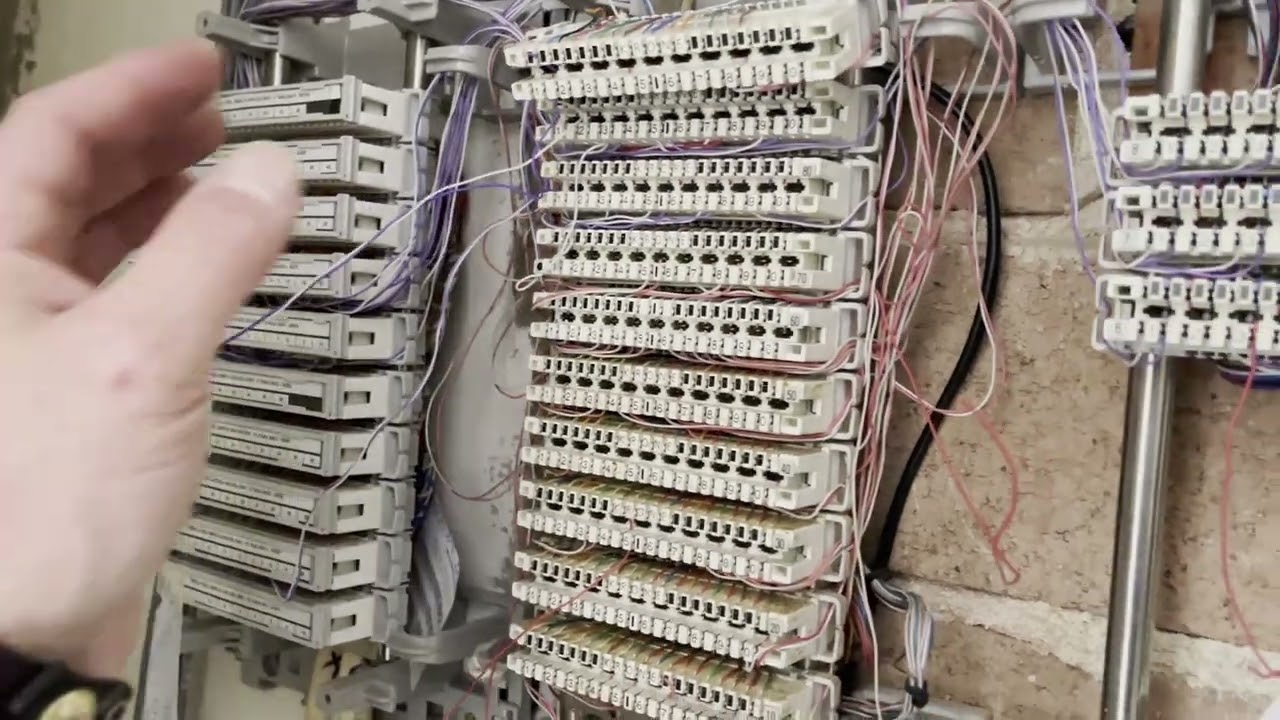
In older Sydney CBD apartment buildings that were wired with a main distribution frame (MDF) — a termination panel in the comms room where individual copper pairs are assigned to each apartment — the connection between the incoming NBN infrastructure and your apartment's specific copper pair depends on a jumper wire connecting the correct pair on the NBN side of the MDF to the correct pair on the building's internal wiring side. In buildings where the MDF was installed or modified by multiple contractors over decades, jumper assignments are frequently incorrect, missing, or have deteriorated through corrosion of the Krone IDC contacts. The NTD syncs at full rate on its side of the MDF; your apartment pair is connected to nothing, or to the wrong unit. ISPs never access the MDF side of the comms room infrastructure. We test the full copper path from the NTD Ethernet port through the MDF and into the building riser, identify incorrect or missing jumpers, re-punch or re-jumper the affected pairs, and verify the signal reaches your apartment wall plate.
HFC Signal Faults in Pyrmont, Ultimo, and Darling Harbour Fringe — Passive Splitter and F-Connector Degradation
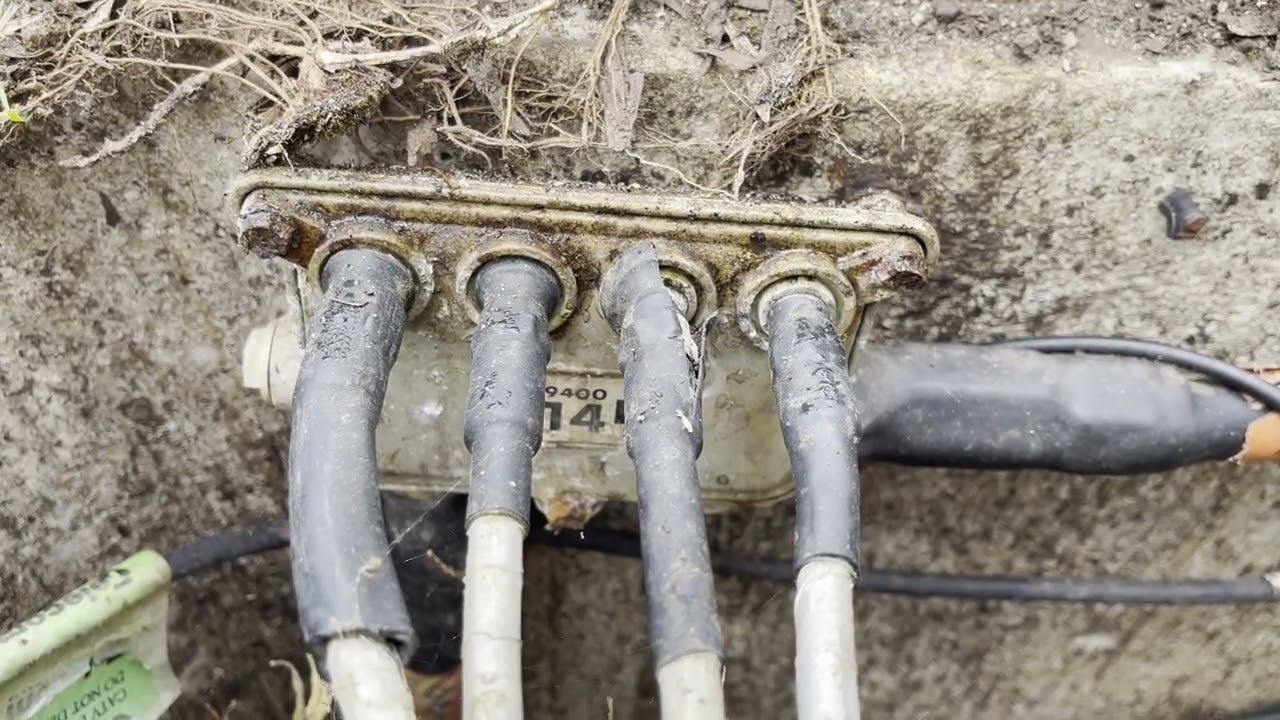
The Pyrmont, Ultimo, and Darling Harbour fringe of the Sydney CBD was part of the original Optus HFC cable network, which was incorporated into the NBN rollout as HFC (Hybrid Fibre-Coaxial) infrastructure. Apartments in this area receive their NBN connection via a coaxial cable network rather than the copper twisted-pair or optical infrastructure of FTTB buildings. HFC-specific faults in this area are distinct from FTTB building wiring faults and include: corroded or poorly installed F-connector terminations at the external cable entry point or at the NBN NTD coaxial port; passive splitter degradation in buildings where the HFC signal is split to multiple units; signal level issues caused by excessive cable run length or attenuation in the coaxial drop from the street to the apartment; and HFC NTD faults where the device itself has failed. ISPs test the HFC signal level remotely and close tickets when the NTD registers a minimum signal level, regardless of actual throughput. We test the coaxial signal path on-site from the external tap through to the NTD, measure signal levels and upstream/downstream margins, and identify splitter or F-connector faults on the same visit.
YOUR INDEPENDENT INTERNET TECHNICIAN —
SYDNEY CBD
SECURE A COM is an independent, Open Registered Cabler (A10089) based in Miranda, Sutherland Shire. We travel to Sydney CBD regularly — approximately 25–35 minutes from our base depending on traffic. We attend with building comms room equipment, Cat 5e cable, Krone punch-down tools, MDF jumpering tools, and coaxial signal analysers. FTTB Cat 3 cable replacement from comms room to apartment in 1990s CBD towers, MDF jumper fault diagnosis and re-termination in older apartment blocks, HFC coaxial signal testing in Pyrmont and Ultimo, and ISP escalation documentation for any network-side faults we identify. We fix the building infrastructure fault the ISP cannot reach.
Book a Sydney CBD TechnicianWATCH US EXPOSE THE REAL FAULT
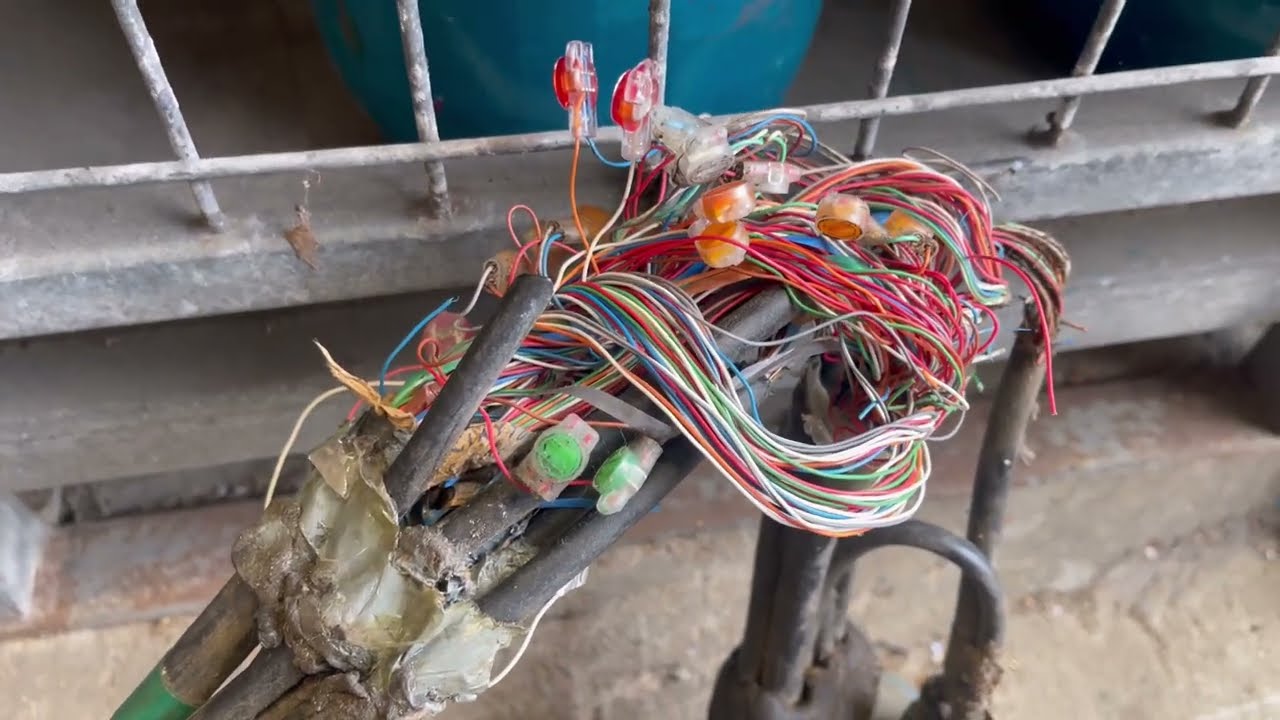
These aren't staged demos. Every video is a real Sydney job where we were called in after the ISP said nothing was wrong — and found exactly what they missed. Watch the full diagnostic process, on camera.
INTERNET & TELECOM SERVICES
From FTTB building comms room cable replacement in 1990s CBD apartment towers to MDF jumpering diagnosis in older apartment blocks and HFC coaxial fault testing in Pyrmont and Ultimo — SECURE A COM provides licensed, on-site internet technician services across all Sydney CBD and inner-city buildings.
Internet Technician NSW (All Locations)
View the full NSW internet technician page — covering Greater Sydney and state-wide locations. FTTB, FTTN, FTTC, and HFC fault diagnosis, comms room access, bridge tap removal, and on-site NBN repairs wherever you are in New South Wales.
View NSW internet technician serviceInternet Fault Finding Sydney CBD
No internet, slow speeds, or intermittent connection in a Sydney CBD or inner-city apartment. Our fault finding service identifies the physical cause — FTTB internal building cable faults, MDF jumpering issues, HFC signal problems, or ISP NTD faults — diagnosed on-site with professional test equipment.
Internet fault finding servicesPrivate NBN Technician
ISP says the NTD in the building comms room is fine — but your Sydney CBD apartment has no internet or is well below plan speed. Our independent private NBN technicians investigate what ISPs cannot: internal building cable runs, MDF pair assignments, and HFC coaxial signal paths through the building infrastructure.
Hire a private NBN technicianNBN Fault Repair Sydney CBD
Cat 3 to Cat 5e cable replacement in FTTB apartment towers, MDF re-jumpering and Krone IDC re-termination in older CBD blocks, HFC F-connector replacement and splitter testing in Pyrmont and Ultimo — all carried out on-site within the same service call where access permits.
NBN fault repair servicesMDF Jumpering for CBD Apartments
Older Sydney CBD apartment buildings with a main distribution frame (MDF) in the comms room frequently have incorrect or missing jumper assignments — the connection between your NBN infrastructure and your apartment's specific copper pair. We access the comms room, diagnose the MDF, and re-jumper or re-terminate the affected pair on the same visit.
MDF jumpering for apartmentsData Cabling Sydney CBD
Once the fault is resolved, many Sydney CBD apartment residents choose to upgrade to proper Cat 6 data cabling within the apartment — hardwired Ethernet points in the study, lounge, and bedroom rather than relying on Wi-Fi from a single wall plate location. We install Cat 6 data outlets within CBD apartments and small commercial offices.
Data cabling installationWiFi Solutions Sydney CBD
After fixing the physical line fault, some Sydney CBD apartments have Wi-Fi dead zones in corner rooms, studies, or rooms furthest from the single wall plate where the modem sits. We assess and implement wireless coverage solutions — mesh Wi-Fi or additional access points — suited to CBD apartment floor plans and building construction types.
Fix WiFi coverage problemsPhone Line Repair Sydney CBD
Crackling landline, no dial tone, or VoIP faults on your NBN phone service in a Sydney CBD apartment or small office. We diagnose and repair phone line faults within the building — including MDF pair faults that affect both internet and voice services on the same internal cable run.
Phone line repair servicesFROM YOUR FIRST CALL TO FIXED — SYDNEY CBD
Here's exactly what happens when you book an internet technician with SECURE A COM in Sydney CBD. We travel from our Miranda base — approximately 25–35 minutes to the CBD depending on traffic — arrive on-site with comms room access equipment and professional test gear, and diagnose FTTB building wiring faults, MDF jumpering issues, and HFC signal problems. Most CBD apartment faults resolved on the same visit.
Book Online — Tell Us Your Building Type, Floor, and What's Happening
Call us on 02 9188 1577 or use the online booking form. Tell us your Sydney CBD suburb and building — apartment tower, heritage conversion, or mixed-use building — your approximate floor, and what's happening: no internet at all, slow speeds, or intermittent connection. You don't need technical knowledge to book. If you know whether your building has FTTB (most CBD towers) or HFC (common in Pyrmont and Ultimo), tell us — otherwise, we'll ask a few quick questions and advise on the most likely fault type for your building era and location before we attend. For FTTB buildings in the CBD core, we also begin advising on comms room access requirements at this stage so there are no delays on the day.
We Confirm Your Appointment — and Guide You Through Comms Room Access Arrangements
We confirm a specific arrival window for your Sydney CBD service call — not a vague half-day block. Sydney CBD is approximately 25–35 minutes from our Miranda base. For FTTB apartment buildings in the CBD, we advise on comms room access before the visit: most CBD apartment buildings require a key or access card held by the strata manager or building concierge, and some require a building management escort for comms room entry. We tell you exactly what to request and from whom, so that access is arranged before we arrive. A simple email or phone call to your strata or building manager the day before is usually sufficient — we provide the wording you need. For HFC buildings in Pyrmont or Ultimo, we advise whether external access to the cable tap on the building exterior is required. No comms room delays on the day.
On-Site Fault Diagnosis — Comms Room Access, NTD Verification, and Internal Cable Trace
We arrive with Cat 5e cable, cable testers, a time-domain reflectometer, MDF jumpering tools, and HFC signal analysers — everything required for CBD apartment fault diagnosis. For FTTB buildings, we access the comms room, confirm the NTD's sync rate and Ethernet handoff, and then trace the internal building cable path from the comms room through the building riser to your apartment wall plate. We test the cable for category (Cat 3 vs Cat 5e vs Cat 6) and measure signal degradation over the run length. For buildings with an MDF, we test jumper assignments on both the NBN side and the building side of the frame, and confirm which pair is assigned to your apartment and whether the connection is intact. For HFC buildings in Pyrmont or Ultimo, we measure coaxial signal levels at the external tap, at the NTD port, and at the internal wall outlet, and identify any signal splitting or F-connector degradation in the path. This is the diagnostic step your ISP has never taken.
Repair Carried Out On-Site — Cable Replacement, MDF Re-Jumpering, or HFC Fix
In 90% of cases we carry out the repair on the same visit. For FTTB buildings with a Cat 3 cable run from the comms room to your apartment, we install a new Cat 5e cable from the patch panel or NTD Ethernet port in the comms room through the building riser to your apartment wall plate — terminated and certified. For buildings with MDF jumpering faults, we re-jumper the correct pair using a new jumper wire and re-punch the Krone IDC contacts if corrosion has degraded the connection. For HFC buildings in Pyrmont or Ultimo, we replace a corroded F-connector, remove a degraded passive splitter, or replace a faulty section of coaxial drop between the building tap and the NTD. Where the fault is on the ISP or NBN Co infrastructure side — an NTD that has failed and requires replacement under the ISP's equipment warranty, or a building-entry fibre fault — we provide written documentation and evidence for escalation.
Speed Verified, Results Explained, 12-Month Guarantee and Strata Report Issued
Before we leave, we re-test your connection speed at the apartment wall plate and confirm the fault is resolved. We explain what we found and what was done in plain language. You receive a 12-month workmanship guarantee on all repairs: if the same fault recurs within 12 months due to our workmanship, we return at no additional charge. For CBD apartment repairs, we provide a written report for the strata manager or building manager summarising the fault found, the work completed, the cable category installed, and our recommendation as to whether other apartments in the building may be affected by the same Cat 3 cable infrastructure — giving the building manager the information they need to plan a broader building wiring upgrade. Full terms at secureacom.com.au/terms-conditions
Based in Sutherland Shire — We Regularly Travel to Sydney CBD
SECURE A COM is headquartered in Miranda, Sutherland Shire. Sydney CBD is approximately 25–35 minutes from our base — the CBD core (Circular Quay, Wynyard, Town Hall) around 30 minutes via the Eastern Distributor or Southern Cross Drive; Haymarket and Central around 30–35 minutes; Barangaroo and Darling Harbour approximately 30–35 minutes; Pyrmont and Ultimo approximately 35–40 minutes. We created this page because we service Sydney CBD regularly and there are very few private Open Registered Cablers who carry the comms room access equipment, Cat 5e installation materials, MDF jumpering tools, and HFC coaxial test equipment to resolve CBD apartment internet faults on a single visit. Sydney CBD is within our Greater Sydney service area — no travel surcharge applies. See our Terms & Conditions for full service area and travel charge details.
// Ready to book your on-site Sydney CBD diagnosis?
Book a Sydney CBD Internet Technician Mon–Fri · FTTB Apartments & HFC Serviced · 90% Fixed Same VisitONE PRICE. NO SURPRISES.
A single fixed fee covers your on-site diagnosis and repair across Sydney CBD. FTTB apartment towers from Circular Quay and The Rocks to Haymarket and Barangaroo, HFC buildings in Pyrmont and Ultimo, and older apartment blocks with MDF comms rooms — no additional charge for connection type, building complexity, or travel within Greater Sydney.
GST inclusive. Includes one hour on-site with an Open Registered Cabler and travel within Greater Sydney — Sydney CBD, The Rocks, Circular Quay, Haymarket, Barangaroo, Pyrmont, and Ultimo are all within our service area with no additional travel surcharge. See full Terms & Conditions →
PRICING FAQ
LICENSED. CERTIFIED. ACCOUNTABLE.
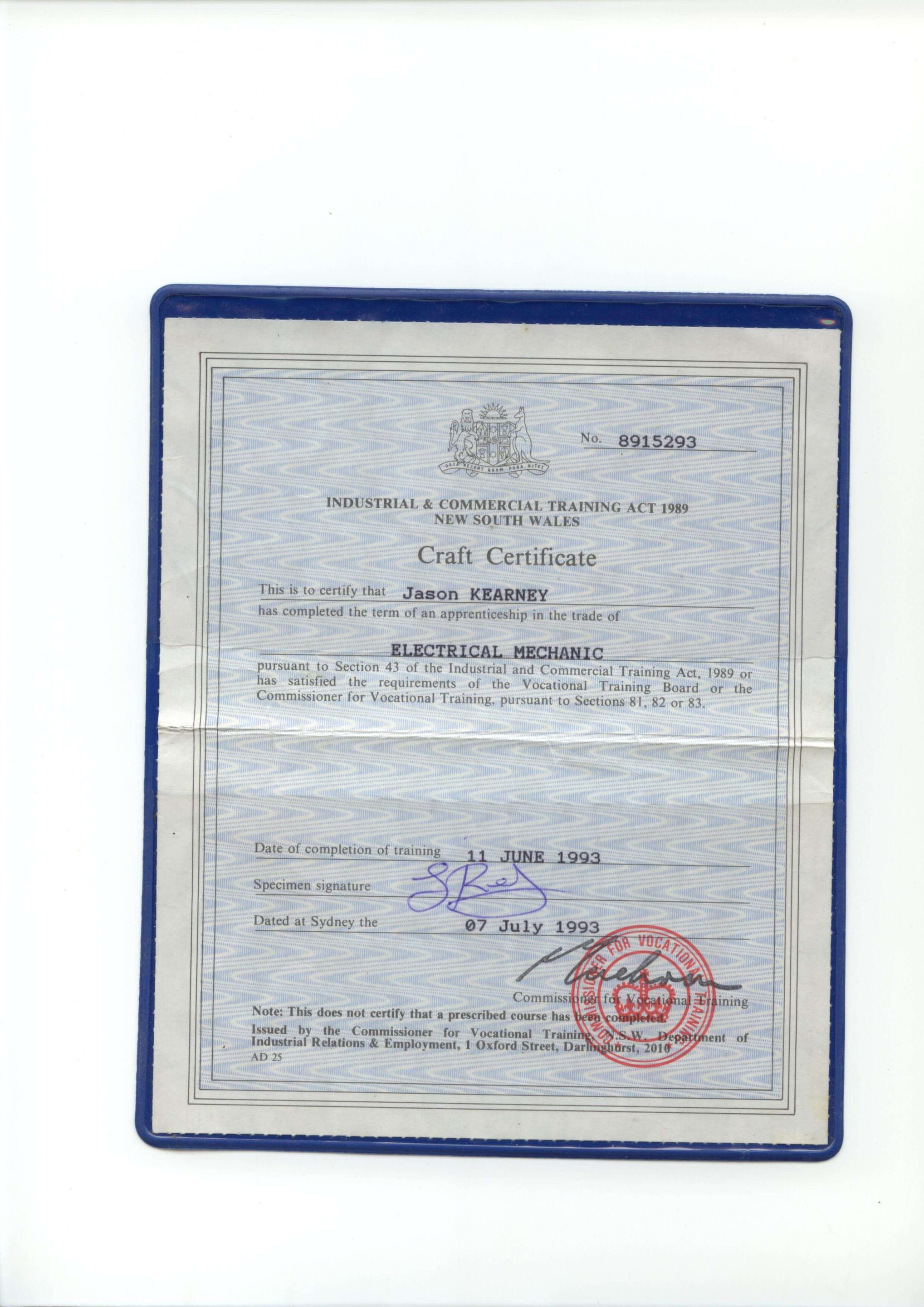
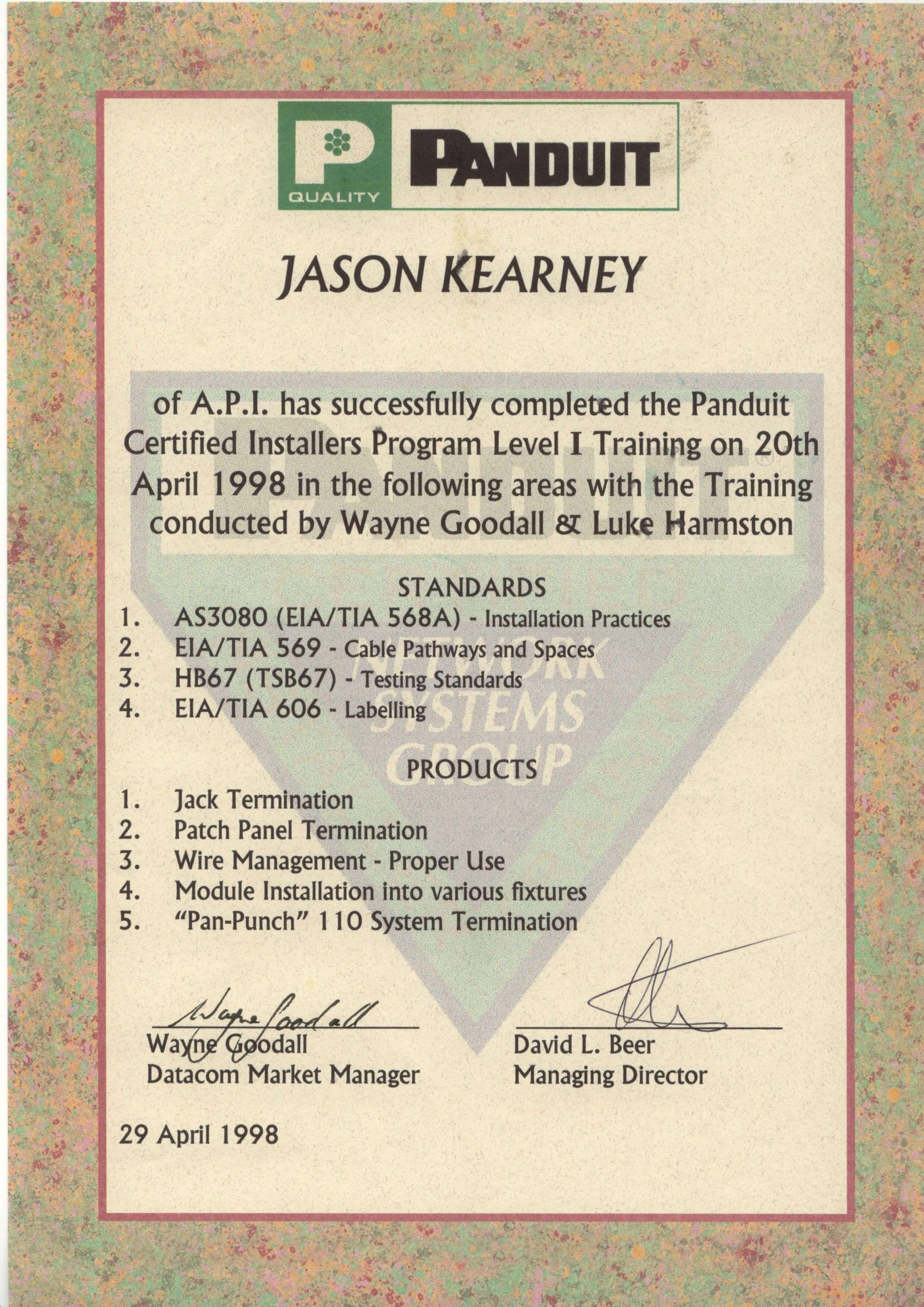
Secure A Com holds every licence and certification required to legally work on NBN and telecommunications infrastructure in Australia. Our master technicians are fully registered with ASIAL, an official national cabling registrar accredited by the Australian Communications and Media Authority (ACMA). When you book with us, you're engaging a properly registered cabler — not an unlicensed contractor. Click any certificate to view it in full.

JASON KEARNEY
Founder Jason Kearney is an Open Registered Cabler with 29 years of industry experience. In 1997, he was a manager for one of the first private contracting companies to work in the Telstra network following privatisation, leading the landmark CAN 2000 Project. Since establishing SECURE A COM in 2008, Jason has provided Sydney with independent, expert fault diagnosis and telecommunications solutions.




WHAT SYDNEY CUSTOMERS SAY


COMPANIES WE'VE WORKED FOR
From national banks to fast food chains — Sydney's biggest organisations trust us with their telecommunications infrastructure.


NBN · Data Cabling · Fibre · WiFi · Network Infrastructure











COMMON QUESTIONS ABOUT OUR SYDNEY CBD SERVICE
Answers to the most common questions we receive about NBN fault diagnosis and internet technician services in Sydney CBD — FTTB apartment towers in the CBD core, MDF jumpering faults in older apartment blocks, and HFC coaxial faults in Pyrmont and Ultimo.
SYDNEY CBD'S
INTERNET TECHNICIAN.
LET'S FIX IT TODAY.
Book an independent, Open Registered Cabler internet technician for your Sydney CBD apartment or small office. We attend on-site with comms room access equipment, Cat 5e cable, MDF jumpering tools, and HFC coaxial test gear — diagnosing FTTB building wiring faults in CBD towers, Cat 3 cable replacement from comms room to apartment, and HFC signal faults in Pyrmont and Ultimo. 90% resolved in a single visit.
Mon–Fri · FTTB & HFC Serviced · Sydney CBD's Independent Internet Technician