
LEAD-IN CABLE
INSTALLATION SYDNEY
Copper Two-Pair. Aerial or Underground.
Private Pole Specialists.
We install copper lead-in cables and HFC RG6 quad shielded lead-in cables for residential, commercial, and new-build properties across Sydney. If your property has a private steel pole — the obstacle that stops NBN contractors in their tracks — we carry out the aerial lead-in installation they cannot. Underground gel-filled copper cable, compliant fixings and hardware. All work quoted per job.
WHEN YOUR NBN CAN'T CONNECT —
AND THE LEAD-IN CABLE IS WHY
Lead-in cable problems are often the last thing a homeowner expects — and the first thing NBN won't fix. Here are the scenarios we're called in for every week across Sydney.
Private Steel Pole — NBN Refused the Job
Damaged Lead-In Cable Affecting Your Connection
New Build — No Lead-In Path to the Property
HFC Lead-In Cable Not to Specification
Underground Installation Required — Not Aerial
YOUR LEAD-IN CABLE.
INSTALLED RIGHT.
NBN-READY.
We carry out copper and HFC lead-in cable installations that meet compliance requirements and leave the network boundary prepared for NBN to complete their connection — including aerial installations on private steel poles that NBN contractors cannot access.
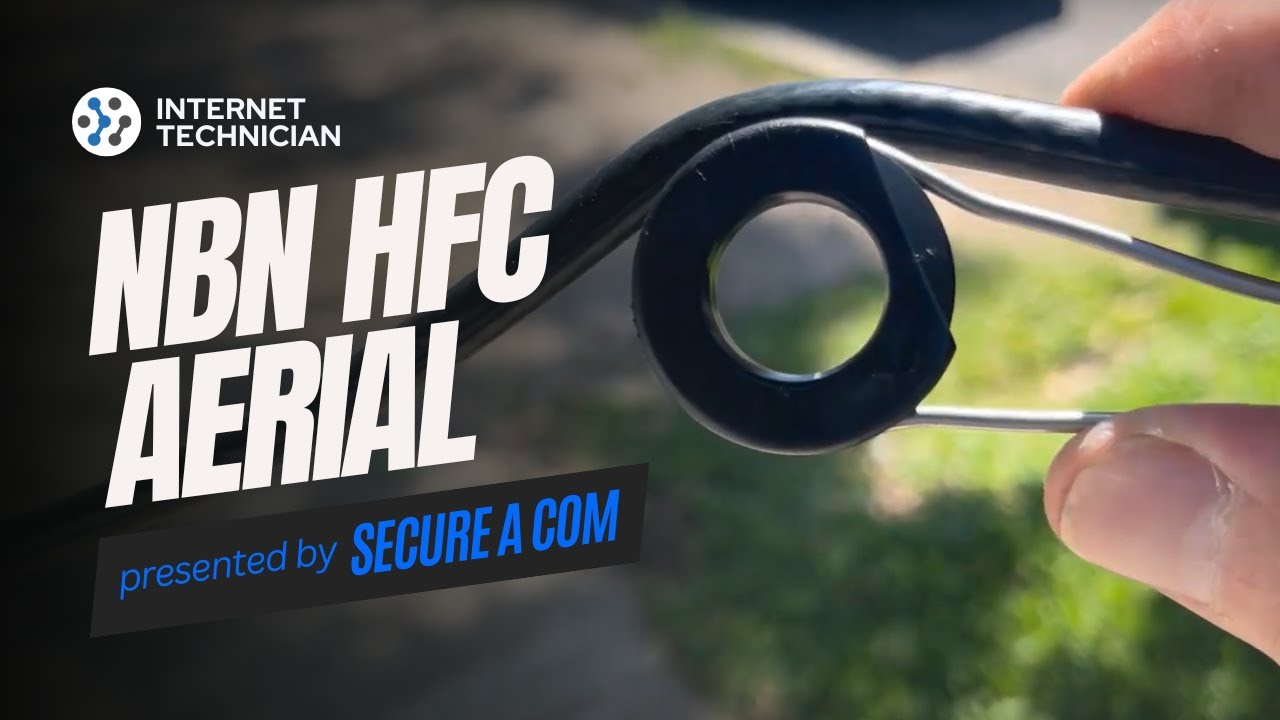
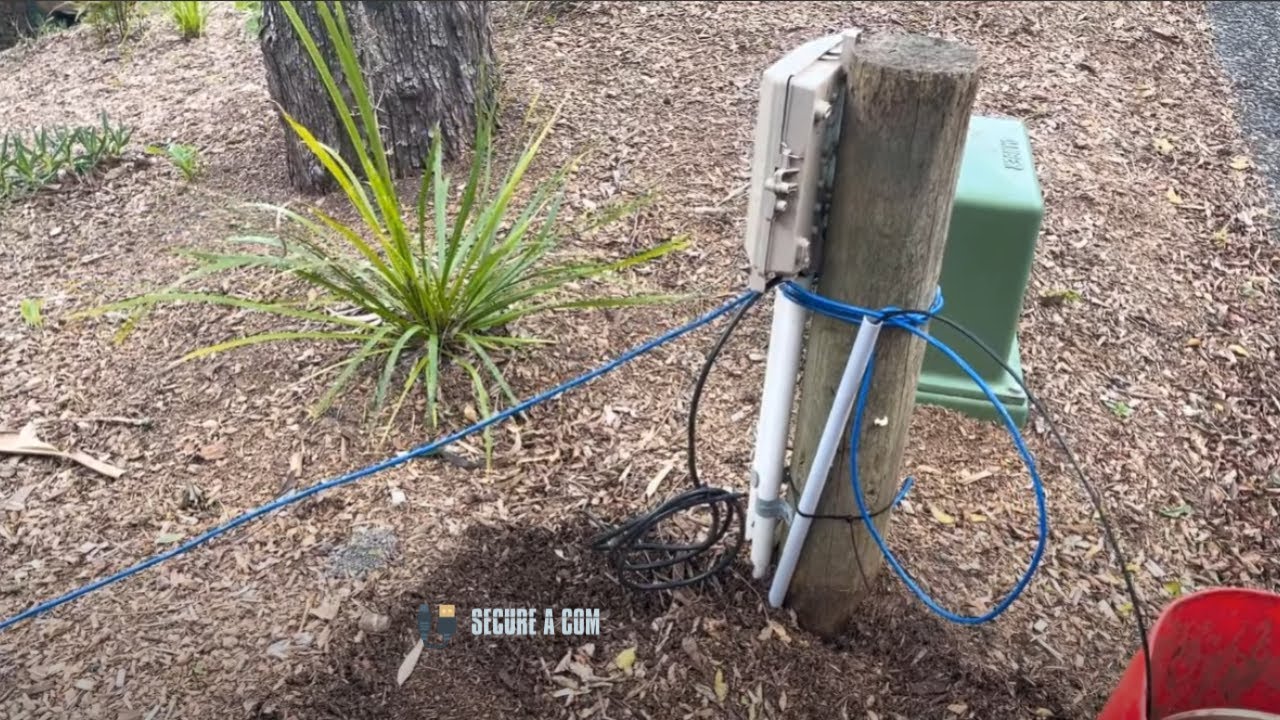
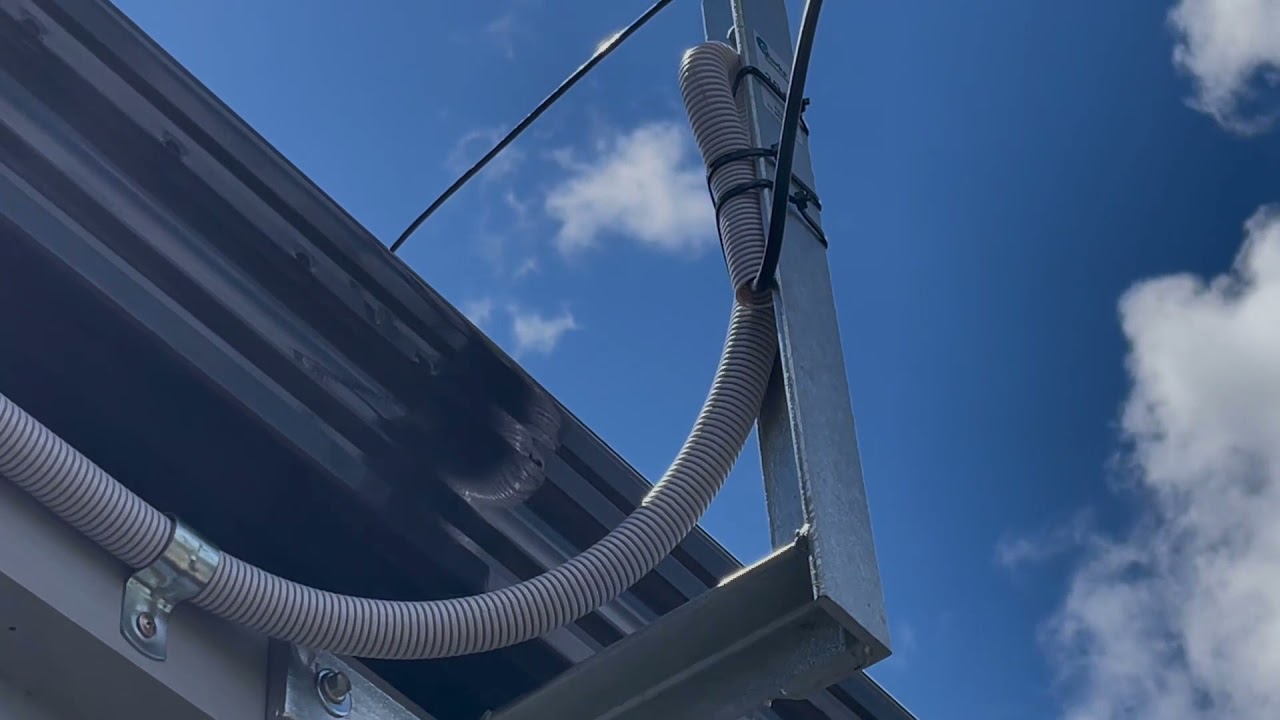
WATCH A REAL LEAD-IN CABLE INSTALLATION
Three real Sydney lead-in cable jobs on camera. Private steel poles NBN wouldn't touch, non-compliant temporary cables, and fallen poles requiring full underground reroutes. Here's what the work actually looks like.
RELATED INSTALLATION SERVICES SYDNEY
Lead-in cable is one part of getting your property NBN-ready. From conduit to wall sockets to internal cabling, SECURE A COM handles the full installation scope.
NBN Conduit Installation Sydney
When the lead-in installation requires conduit from the street pit to the building, we install compliant conduit pathways. Often carried out alongside the lead-in cable run.
Lead-in conduit installationNBN Wall Socket Installation
Once the lead-in is in place, a new dedicated wall socket connects your router to the NBN network. We install compliant sockets in the right location for your setup.
NBN socket installationNBN Internal Cabling Installation
Need more than a single connection point? We run internal data cabling to multiple rooms, home offices, or entertainment areas on larger installations.
NBN internal cablingNBN Installation Sydney
Our complete NBN installation service covers the end-to-end scope — lead-in to router — including conduit, cabling, sockets, and preparation for activation.
Full NBN installationMDF Jumpering for Apartments
If your apartment or strata building needs an NBN connection through the main distribution frame, we carry out MDF jumpering and building comms room remediation.
MDF jumpering SydneyPhone Line Repair Sydney
Crackling landline or no dial tone? Lead-in cable faults often affect both NBN and phone line performance. We repair copper phone line faults across residential properties.
Fix phone line faultsNBN Fault Repair Sydney
Lead-in replaced but still having NBN issues? Our independent fault repair service diagnoses and resolves faults anywhere in the network chain — from pit to router.
NBN fault repairWiFi Solutions Sydney
Once your lead-in and connection are working, we solve WiFi dead zones and coverage problems throughout your home or office with the right hardware and placement.
Fix WiFi coverageFROM FIRST CALL TO READY FOR NBN
Lead-in cable installations vary by property — aerial versus underground, private poles, HFC versus copper, new builds versus replacements. Here's exactly what happens from the moment you contact SECURE A COM to the point where NBN can finalise your connection.
Initial Contact — Describe Your Property and Lead-In Requirement
Call us or submit your details via our contact form and describe your lead-in cable situation — whether it's a private pole NBN refused to climb, a damaged or missing lead-in, a new build without infrastructure, or an HFC cable that needs replacing. Photos of the pole, pit, point of attachment location, and building entry are helpful and speed up the initial assessment. We confirm whether a site inspection is needed or whether we can begin scoping from your description.
Site Inspection — Pole Access, Conduit Path, Point of Attachment
If a fixed-price quote is required, we attend the property and carry out a full on-site assessment. We confirm the pole type (private steel or network) and whether aerial or underground installation is more practical for the site. We assess existing conduit pathways, building entry points, wall box location, aerial span and clearance requirements, and access to the street pit. The inspection determines the exact cable type, hardware requirements, and routing method before we issue a written quote.
Quote and Scope Confirmation — Cable Type, Method, Hardware
Based on the assessment, we issue a written quote defining the cable type (copper two-pair gel-filled or HFC RG6 quad shielded), installation method (aerial from pole hook to point of attachment, or underground through conduit), all hardware required (pole hook, wall box, mechanical protection, conduit), and the preparation work needed at the network boundary for NBN to complete their connection. No work begins without your explicit approval of the quoted scope and price.
Lead-In Installation — Pole Hook, Point of Attachment, Cable Run
We attend site and carry out the approved installation: mounting the approved pole hook on the private steel pole, installing the compliant wall box and point of attachment on the building, running the aerial lead-in cable from the pole hook to the point of attachment with correct tension and catenary — or, for underground installations, laying conduit and gel-filled cable from the pit to the building entry with mechanical protection at all exposed sections. All fixings, hardware, and cable routes comply with relevant Australian telecommunications standards.
Testing and Final Preparation — Cable Coiled and Ready for NBN
We test the installed lead-in cable for continuity and confirm all hardware is secure, correctly tensioned, and compliant. The correct length of cable is coiled and secured on the private pole in the configuration required for NBN to stretch their connection across from their network pole in the street. This means when NBN attends, they can complete their termination and connection without any further work on your side — no delays, no access conflicts, no OH&S complications.
// Ready to get your lead-in cable installation scoped and quoted?
GET A QUOTE Prefer to discuss your property first? Call us on 02 9188 1577 and we'll assess the scope over the phone.LEAD-IN CABLE INSTALLATION PRICING. QUOTED PER JOB.
Lead-in cable installations vary significantly by property. Aerial versus underground, pole type, cable length, conduit requirements, and hardware all affect the final cost. We assess and quote before any work begins — no surprises.
site assessment recommended
Every lead-in installation is different. Aerial versus underground, copper versus HFC, private pole versus standard pit — we assess and provide a written quote before any work begins. No work commences without your explicit approval. See Terms & Conditions →
WHAT AFFECTS THE PRICE
LICENSED. CERTIFIED. ACCOUNTABLE.
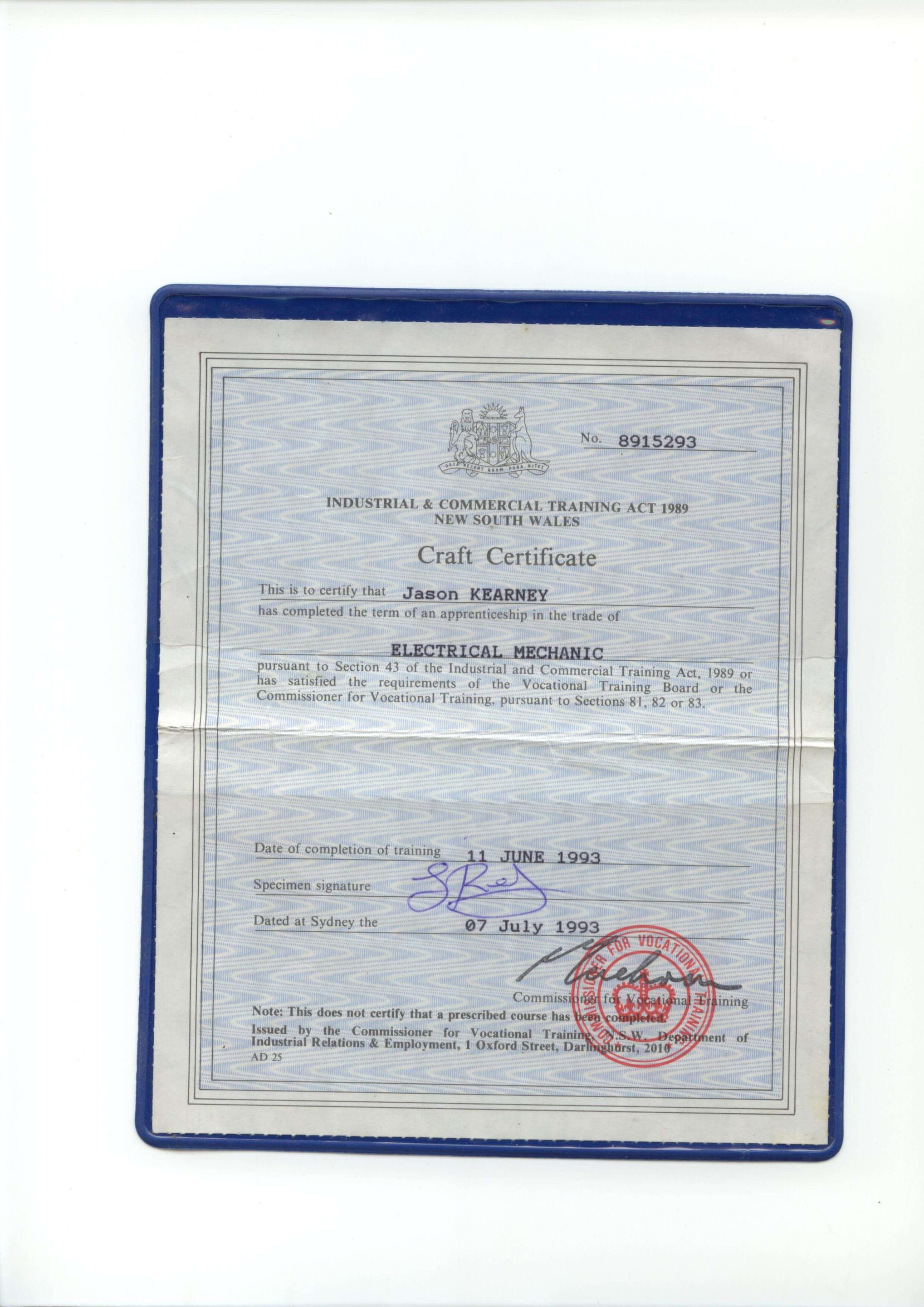
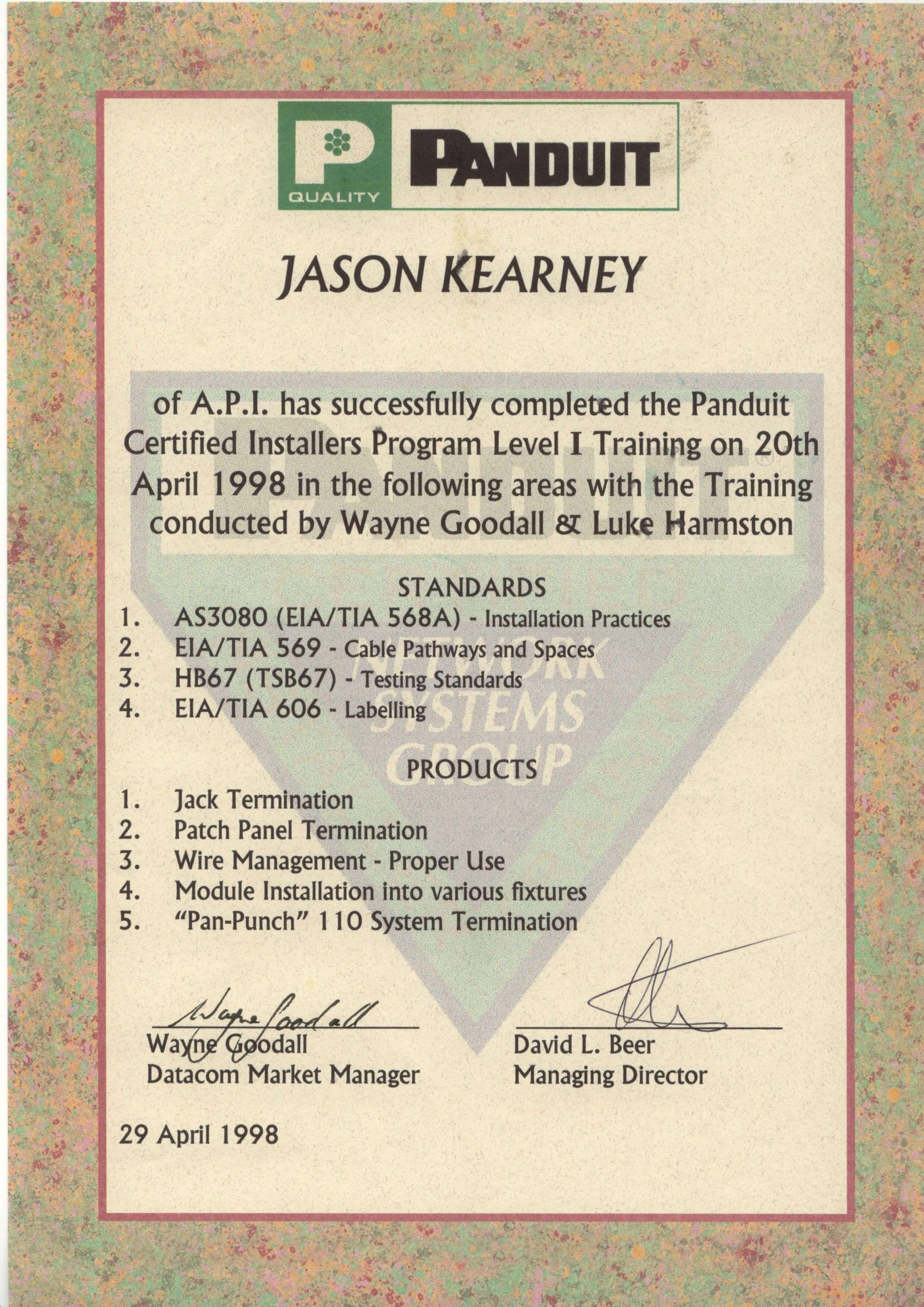
Secure A Com holds every licence and certification required to legally work on NBN and telecommunications infrastructure in Australia. Our master technicians are fully registered with ASIAL, an official national cabling registrar accredited by the Australian Communications and Media Authority (ACMA). When you book with us, you're engaging a properly registered cabler — not an unlicensed contractor. Click any certificate to view it in full.

JASON KEARNEY
Founder Jason Kearney is an Open Registered Cabler with 29 years of industry experience. In 1997, he was a manager for one of the first private contracting companies to work in the Telstra network following privatisation, leading the landmark CAN 2000 Project. Since establishing SECURE A COM in 2008, Jason has provided Sydney with independent, expert fault diagnosis and telecommunications solutions.




WHAT SYDNEY CUSTOMERS SAY


COMPANIES WE'VE WORKED FOR
From national banks to fast food chains — Sydney's biggest organisations trust us with their telecommunications infrastructure.


NBN · Data Cabling · Fibre · WiFi · Network Infrastructure











// Lead-In Cable FAQ
LEAD-IN CABLE INSTALLATION QUESTIONS ANSWERED
Everything you need to know about lead-in cable installations — private poles, aerial vs underground, cable types, ownership, and what happens after SECURE A COM installs.
Answered
GET A QUOTE
A lead-in cable is the cable that connects the telecommunications network in the street to your property. Depending on the property and network type, it may run underground via conduit from a pit, aerially from a network pole, or through a private pole before reaching the building.
For copper-based services, the lead-in is typically a two-pair copper cable. For HFC services, it must be RG6 quad shielded coaxial cable to meet the minimum specification. In larger sites — such as industrial estates and multi-building complexes — heavier-grade external cabling may be routed between pits and buildings.
The lead-in cable is the critical link between the street network and your property. If it is damaged, undersized, or non-compliant, your service will not activate correctly regardless of what happens inside the building.
NBN Co owns and maintains the network infrastructure up to their network boundary — typically the network pole in the street or the pit at the property boundary. Once the cable crosses onto private property, maintenance and replacement responsibility generally falls to the property owner.
This means if your lead-in cable is damaged, corroded, water-saturated, or simply no longer compliant, NBN will not replace it. It is a property owner responsibility. SECURE A COM installs and replaces lead-in cables on residential, commercial, and industrial properties across Sydney.
For occupational health and safety (OH&S) reasons, NBN contractors are not permitted to climb private steel poles. This is a documented policy, not a case-by-case decision. If your property has a private steel pole, NBN will not perform the aerial lead-in installation beyond their network boundary — regardless of how long you wait or how many appointments are booked.
SECURE A COM fills this gap. We install a compliant point of attachment on your building, mount an approved pole hook on the private steel pole, and run the aerial lead-in cable between them. We then leave sufficient compliant cable coiled and prepared on the pole so NBN can simply attend and complete their final connection across to their network pole.
This is one of the most common scenarios we resolve — and without a licensed contractor filling this role, properties with private poles can remain unconnected indefinitely.
A point of attachment (POA) is the approved hardware mounted on your building that anchors and supports the aerial lead-in cable as it enters the property. It provides the structural anchor point for the cable span between the pole and the building, and it is where the lead-in cable is transitioned from external aerial to internal building entry.
NBN requires a compliant point of attachment before they can connect the aerial cable from their network pole. If the POA is missing, incorrectly installed, or non-compliant, NBN cannot complete the connection. We install compliant POAs as a standard component of every aerial lead-in installation.
For copper lead-in installations, we use two-pair copper gel-filled lead-in cable. Gel-filled construction means the cable core is filled with a water-blocking gel compound, making it:
Waterproof — resists moisture ingress even in flooded conduit. UV-resistant — safe for direct aerial runs exposed to Australian sun. Insect and rodent resistant — the gel and jacketing deter pest penetration. Heavy-duty jacketed — provides mechanical protection for both underground and aerial external applications.
This cable type is suitable for both underground conduit installations and aerial runs. It meets the requirements for external lead-in cable work and is the correct specification for new copper lead-in builds and replacements.
HFC lead-in installations require RG6 quad shielded coaxial cable. Quad shielding means the cable has four layers of shielding — two foil layers and two braid layers — providing maximum protection against signal interference and ingress from external RF sources.
Standard RG6 (dual shielded) or lower-grade coaxial cable will not meet the HFC network specification. Using non-compliant cable for an HFC lead-in will result in signal degradation, noise ingress, and activation failures — NBN's HFC network is sensitive to signal quality at the lead-in level.
We install only compliant RG6 quad shielded cabling for all HFC lead-in work. If your existing HFC lead-in is lower grade and causing activation or performance issues, replacement with quad shielded cable is the correct fix.
In most cases, yes. Aerial lead-in replacement typically requires no excavation — we remove the damaged cable and run a new compliant cable between the pole and the building's point of attachment. The disruption is minimal and usually completed within a single visit.
Underground lead-in replacement depends on the condition of the existing conduit. If the conduit is intact, the cable can often be pulled through the existing path. If the conduit is collapsed, blocked, or absent, new conduit installation will be required. We inspect and assess the conduit pathway during our site evaluation and quote accordingly — no surprises after work begins.
A lead-in cable is the external cable that runs from the street network — either from a pit or a pole — to your property. It is outdoor-rated, heavy-duty, and must meet specific external-grade specifications for mechanical protection, UV resistance, and moisture resistance.
Internal NBN cabling is everything from the building entry point onwards — cable runs inside wall cavities, to network termination points, wall sockets, and communications outlets. Internal cabling is a separate scope, uses different cable grades, and is governed by different installation standards.
SECURE A COM handles both. Lead-in cable work is an external-only scope — from the network boundary to the building entry. If you also need internal cabling or wall socket installation after the lead-in is in place, this is quoted as a separate service.
NEED A LEAD-IN CABLE INSTALLED? LET'S SCOPE IT.
Aerial or underground. Copper two-pair or HFC RG6 quad shielded. Private steel poles — no problem. We assess your property, quote the job, and install to standard. Ready for NBN to connect.
Mon–Fri · Residential & Commercial · Sydney-wide coverage