

How a visit works
A visit has five steps. It starts with a conversation and ends with the findings in writing, whoever they point to.
-
The call
Tell us what the connection is doing.
Many faults narrow down in that first conversation, before anyone drives anywhere.
-
Booking
Book, with the fee in front of you.
The service call covers the first hour on site and the travel, and you see it before you book.
-
On site
We test, one thing at a time.
We start at your socket and work back towards the network boundary, one test at a time, each one ruling something in or out, until the pattern shows where the fault is.
-
The fix
What's on your side gets fixed.
If the fault is in your wiring, a socket, the modem or the way things are connected, it's fixed on the visit wherever it can be. Materials are quoted before any work that needs them, and if the job will run past the first hour, you're told before the hour ends.
-
After
You get it in writing.
Every service call ends with a written summary by email: what we tested, what we found, and whose side of the boundary it's on. If it's on the network's side, fixing it is your provider's job. We can't make anyone fix their side, but if you want us with you all the way, we do everything in our power to get you a result.
How we find a fault
Testing equipment does not point to a problem. It gives you readings. You test one thing here and one thing there, and you recognise the pattern.
That is how we find faults. The equipment matters, and we carry the right equipment, but the same reading can mean a bad joint in the street, an old socket still connected to the line, or a modem in the wrong port. Telling them apart comes from having seen the pattern before.
It is also why the fault is so often somewhere other than where you were told.
324
filmed fault jobs in our own study
56%
proven not to be in the customer's cabling
What we do, and what we don't
What you get from us is the fault found, your side fixed, and the rest in writing.
Your side
What we do
- Test everything on your side of the network boundary
- Fix what's on your side while we're there, wherever we can
- Put what we found in writing, whoever it points to
- Prepare detailed reports for your provider if you need them
- Speak to your provider for you, if you want us with you
The network's side
What we don't do
- Test inside NBN's network, because we aren't NBN
- Connect into NBN's network
- Promise a speed
- Promise that a provider will fix its side, or how long it will take
A fault visit and a cabling job
Two kinds of visit, priced two ways.
Fault finding
- What it is
- Something has stopped or is playing up, and nobody knows why yet
- How it's priced
- The service call, $250 inc. GST, set before you book
- On the day
- Testing from your socket to the boundary, then your side fixed
- Warranty
- 90 days if the original fault comes back
Cabling or installation
- What it is
- A cable run, a moved NBN box, a conduit or a new socket
- How it's priced
- Quoted in writing first; an estimate from photos is free
- On the day
- The job done to the written quote
- Warranty
- 12 months on workmanship; parts under the maker's warranty
Not sure which yours is? Describe it on the phone and we'll tell you. How quotes are priced
What it costs
Service call · fault finding
$250 inc. GST
- First hour on site
- Travel up to 40 km
- Testing and diagnosis
- Free basic report by email
Travel is measured from our Sutherland Shire office. Every other charge, from extra time to travel further out, is on the pricing page. See every price
The reports
Three levels. The first comes with every service call; which of the others you need depends on what you'll do with it.
- Basic report Free
A short written summary by email: what we tested, what we found, and whose side of the boundary it is on.
- Standard report $55 inc. GST
A detailed PDF with the findings, the test results and our recommendations. No photos or video.
- Full escalation report $185 inc. GST
Everything in the standard report, plus photos and video of the testing. The report for proving the fault is on NBN's side: written for escalation to your provider or the carrier, a refund claim, or a TIO complaint.
Photos and video of the testing are part of the full escalation report, not of every job. Full pricing
Before you book
Do the free checks first. Book if they don't settle it.
Some faults are something you can check yourself. The guide covers the ones we'd ask you about on the phone.
Questions about a visit
Do I need to be home for the visit?
Yes. An adult needs to be there for the whole visit.
Can you tell what's wrong over the phone?
Often we can narrow it down. Describe what the connection does and when: it drops out every afternoon, it's slow at night, it stopped when it rained. A lot of faults can be worked out from that conversation before anyone drives anywhere, and sometimes the answer is something you can check yourself.
What should I do before I book?
Ask your provider whether there's a known outage, and note what the lights on the NBN box are doing. For a cabling job, send photos of where things are and where you want them, with a rough distance in metres. That's usually enough for an estimate.
What if the fault is on NBN's side?
Then fixing it is your provider's job, and we can't make them do it. You still get the findings in writing, and the full escalation report, with photos and video of the testing, is what you send them. Some providers refund the call-out when we find the fault is on NBN's side after NBN or the provider said it was in your property. That is the provider's decision, so we cannot promise it.
Will I get a report even if you fix it on the day?
Yes. Every service call ends with a short written summary by email, whether the fault was fixed on the day or points to the network.
Do you film the job?
Filming is routine, and it's your choice. You can ask us not to use your job, and a name or an address is never published without consent.
Dig deeper
Read before you book.
-
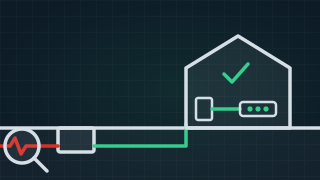 Real jobs & case studies In 56% of our callouts, the fault was not in the customer’s cabling 324 filmed internet fault jobs analysed. In 56% the fault was not the customer's cabling, and equipment was to blame in 5.6%. See where NBN faults are found. Read the guide
-
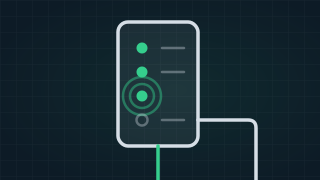 NBN explained NBN connection box lights: what they mean, and what to do when they change What the lights on your NBN box mean on fibre, HFC and fibre to the curb: why it clicks, flashes blue or shows red, and what to do before you ring anyone. Read the guide
-
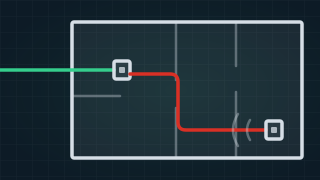 NBN explained What is a bridge tap? A bridge tap is an old phone socket still connected to your internet line. What it means, what it does to NBN on FTTC, FTTN and FTTB, and how it is fixed. Read the guide